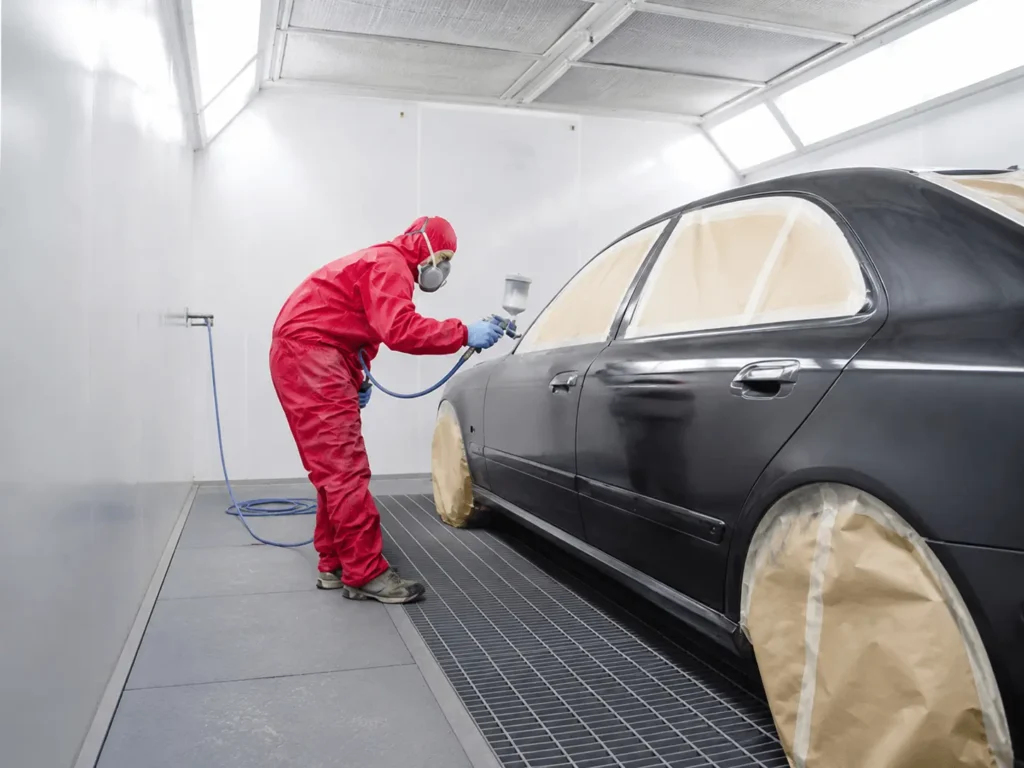
An auto paint booth can cost $10,000 to more than $200,000, depending on its airflow design, size, heating system, construction quality, and installation needs. A basic crossdraft booth may fall between $10,000 and $25,000 for equipment, while a heated downdraft booth installed in a working body shop can pass $100,000.
The number on a booth supplier’s quote rarely tells the whole story. Freight, assembly, concrete work, exhaust ducting, electrical service, fire suppression, permits, and air-replacement equipment can add tens of thousands of dollars.
That is why two booths that look similar online may have final project costs that differ by $50,000 or more. Shop owners need to compare complete installed systems, not just metal panels, fans, and lights. This guide breaks down realistic price ranges and explains where the money goes.
What Is the Average Cost of an Auto Paint Booth?
A commercial auto paint booth commonly costs $25,000 to $100,000 after installation, though simple booths can cost less and high-production systems can cost far more.
The booth itself may represent only half of the project budget. Building changes, labor, utilities, code-related equipment, and approval fees often raise the final amount.
Here is a practical starting range:
| Auto paint booth project | Approximate cost |
| Small parts or motorcycle booth | $5,000–$20,000 |
| Basic automotive crossdraft booth | $10,000–$30,000 |
| Installed crossdraft booth | $25,000–$55,000 |
| Semi-downdraft booth | $25,000–$60,000 |
| Installed semi-downdraft booth | $40,000–$85,000 |
| Side-downdraft booth | $40,000–$90,000 |
| Full downdraft booth | $50,000–$120,000 |
| Installed heated downdraft system | $80,000–$200,000+ |
| Large truck, bus, or custom booth | $100,000–$500,000+ |
These figures are planning ranges rather than fixed retail prices. Most established booth manufacturers prepare quotes after reviewing the vehicle size, building layout, production target, local climate, and available utilities.
A quote near the bottom of a range may cover an unheated shell with exhaust fans and basic controls. A quote near the top may include insulated panels, pressurization, a burner, cure mode, advanced controls, high-output lighting, installation, and startup support.
Auto Paint Booth Cost by Airflow Type
Airflow design has a direct connection to equipment price, finish cleanliness, construction work, and operating expense. Automotive booths generally use crossdraft, semi-downdraft, side-downdraft, or full downdraft airflow.
Each design moves overspray differently. The right choice depends on how many vehicles the shop paints, the finish quality customers expect, and how much building work the owner can accept.
Crossdraft Paint Booth Cost
A crossdraft paint booth usually costs $10,000 to $30,000 for the equipment and around $25,000 to $55,000 as a completed installation.
Fresh air enters through filtered doors or an intake wall. It then travels horizontally across the vehicle before leaving through exhaust filters at the opposite end.
Crossdraft booths are usually the least expensive enclosed option because they do not need a floor pit. Their mechanical layout is also simpler than that of a side-downdraft system.
This design can work well for small collision shops, restoration businesses, dealership repair departments, and lower-volume painters. It gives the technician a controlled environment without demanding the largest capital budget.
The main compromise appears in airflow around the vehicle. Air passes over the front of the car before reaching the rear, so overspray may travel across painted surfaces. A skilled painter can still produce strong results, but the booth may need more careful cleaning and spray planning than a full downdraft model.
Semi-Downdraft Paint Booth Cost
A semi-downdraft booth generally costs $25,000 to $60,000 before major site work. A complete project may reach $40,000 to $85,000.
Filtered air usually enters through the ceiling near the front of the booth. It moves downward and toward an exhaust chamber at the rear.
This layout offers some of the finish benefits associated with downward airflow without requiring a full-length concrete pit. That middle position makes it popular among body shops seeking cleaner refinishing conditions at a more manageable price.
A semi-downdraft booth may also fit an existing building more easily than a true downdraft system. The project can still require roof penetrations, ducting, upgraded electrical service, and a heated air-replacement unit.
Side-Downdraft Paint Booth Cost
A side-downdraft booth commonly costs $40,000 to $90,000 for equipment, with installed projects often landing between $65,000 and $140,000.
Air enters through the ceiling and moves down around the vehicle. Exhaust plenums positioned along the lower side walls pull overspray away from the work area.
The side exhaust chambers avoid the deep pit associated with many full downdraft booths. This can make the design attractive when excavation is expensive or impossible.
Its added fans, plenums, filters, and ductwork raise the price. A side-downdraft booth may need more floor width than a crossdraft booth, which can become a concern in a crowded repair facility.
Full Downdraft Paint Booth Cost
A full downdraft auto paint booth may cost $50,000 to $120,000 for the booth and mechanical equipment. Installed heated systems often fall between $80,000 and $200,000 or more.
Clean air enters through a filtered ceiling and travels vertically around the vehicle. Overspray is pulled through floor grates into an exhaust pit or raised basement.
This airflow carries airborne paint away from the vehicle and painter without sweeping it across the full length of the car. That supports cleaner finishes and makes downdraft booths common in high-volume collision centers, luxury repair facilities, and production-focused refinishing departments.
The floor system is a major source of added cost. The shop may need excavation, reinforced concrete, steel grating, drainage planning, and structural engineering. Existing slabs can contain utilities or reinforcement that complicate the work.
Some facilities use a raised steel basement instead of digging a pit. This avoids excavation but adds a platform, vehicle ramps, guardrails, and ceiling-height concerns.
What Is Included in the Paint Booth Equipment Price?
A standard equipment package may include wall panels, vehicle doors, personnel doors, lights, intake filters, exhaust filters, fans, motors, and a basic control panel.
It may not include the parts needed to place the booth into legal service.
This distinction causes many budget surprises. A booth advertised at $18,000 could become a $45,000 project once it reaches the building and passes inspection.
Before comparing quotes, ask each supplier to list every included and excluded item. The document should state whether the price covers:
- Exhaust fan and motor
- Intake and exhaust plenums
- Interior lighting
- Control panel
- Vehicle and personnel doors
- Filter sets
- Exhaust duct and roof cap
- Air-replacement equipment
- Burner and cure controls
- Fire-suppression components
- Freight and unloading
- Mechanical assembly
- Electrical connections
- Gas piping
- Concrete or structural work
- Permit drawings
- Testing and startup
- Inspector corrections
- Operator training
A cheaper proposal may simply leave more work for local contractors. A higher proposal may cover most of the project under one contract.
How Much Does Paint Booth Installation Cost?
Installation can add $10,000 to $50,000 or more to an automotive booth project. Large heated booths, difficult buildings, and downdraft foundations can push labor and site work beyond that range.
Assembly is only one part of the bill. Contractors may need to cut roof openings, mount ductwork, run electrical feeders, connect natural gas, install fire protection, and modify the concrete floor.
Freight and Unloading
Freight for a commercial auto booth can cost several thousand dollars. Distance, shipment size, fuel charges, and access to the property all affect the amount.
The buyer may also need a forklift, telehandler, crane, or loading crew. Some quotations deliver the equipment to the curb and leave unloading to the customer.
Imported booths may appear inexpensive at first. Customs duties, port fees, inland freight, replacement-part delays, certification questions, and local installation work can narrow the original price gap.
Assembly Labor
A bolt-together booth still requires trained labor. Panels must be placed correctly, doors must seal, lights need proper wiring, fans require correct rotation, and ducts must be supported.
Simple installations may cost $8,000 to $20,000 in labor. Heated or pressurized booths can require a larger mechanical crew and a longer startup process.
Self-installation may reduce labor costs, but mistakes can delay inspection. Incorrect duct supports, electrical components, fan placement, clearances, or fire-suppression work may need to be rebuilt.
Exhaust Ductwork
Exhaust duct pricing depends on diameter, material, length, roof height, number of elbows, and required supports. The basic booth duct cost around $15 to $60 per foot while large spiral duct can reach roughly 36 to $125 per foot.
Those figures do not always cover labor, roof flashing, access sections, weather caps, cranes, or structural framing. A long exhaust route can also demand a larger fan because every elbow and extra foot adds resistance.
A booth placed near an exterior wall may cost less to vent than one located in the middle of a large building.
Electrical and Gas Connections
Fans, lighting, controls, air compressors, heaters, and fire equipment place new loads on the building. A shop with limited electrical capacity may need a panel upgrade, transformer work, or a larger utility service.
Electrical work may add $3,000 to $15,000. Larger service upgrades can cost much more.
A gas-heated booth needs a correctly sized gas line, regulators, valves, combustion-air planning, and licensed connection work. The existing meter may not supply enough fuel for a large burner.
Concrete Work and Downdraft Pits
A downdraft pit can add $15,000 to $50,000 or more, depending on excavation depth, soil conditions, reinforcement, utilities, drainage, and access for construction machinery.
Cutting an existing shop floor creates uncertainty. Contractors may find plumbing, conduit, thick reinforcement, unstable soil, or groundwater.
New construction usually gives the owner more control. The pit can be included in the building plans before the slab is poured, reducing demolition and rework.
How Much Does a Heated Auto Paint Booth Cost?
A heated automotive booth often costs $50,000 to $150,000 before extensive building work. Premium heated downdraft systems can exceed $200,000 after installation.
The heating unit replaces exhausted shop air with filtered air and raises its temperature. Some systems also offer a bake or accelerated-curing mode.
The air-replacement unit may cost as much as or more than a basic booth shell. It needs a large fan, burner, filtration section, controls, duct connections, and safety devices.
Heated airflow can shorten flash and cure periods, keep booth temperature steadier, and support production during cold weather. The financial value depends on vehicle volume. A shop painting one car every few days may struggle to recover the added cost, while a busy collision center can gain more billable cycles from the same floor area.
Energy prices also deserve attention. A large booth continuously exhausts a high volume of conditioned air. Gas and electricity costs rise with booth size, temperature setting, cure time, air leakage, and local weather.
How Much Do Permits and Code Requirements Add?
Permits, engineered drawings, inspections, and fire-related work may add $3,000 to $20,000 or more. The figure changes sharply between cities and building types.
Commercial spraying is regulated because coatings can release flammable vapors, hazardous air pollutants, and combustible residue. Mechanical ventilation must remove vapors and control overspray while spraying is taking place.
U.S. auto-body operations covered by the federal 6H rule generally need to perform spray-applied coating work in a booth or prep station equipped with suitable filters. Painter training, equipment practices, records, and notifications may also apply.
Local authorities may require review from several departments:
- Building
- Fire prevention
- Mechanical
- Electrical
- Environmental or air quality
- Planning and zoning
- Workplace safety
Approval should be investigated before ordering the booth. A model that cannot meet local listing, airflow, fire-protection, or electrical requirements can become an expensive piece of unused equipment.
The fire-suppression system alone can add several thousand dollars. Existing sprinkler coverage may need alteration, and the booth may require interlocks that stop spraying when ventilation is not running.
What Factors Change Auto Paint Booth Prices?
The largest price differences come from airflow style, booth dimensions, heat, air volume, certification, site conditions, and production features.
A standard passenger-car booth is much cheaper than a system designed for vans, box trucks, buses, or heavy equipment. Every increase in width, height, or length adds wall material and raises the volume of air that must be moved.
Booth Size and Vehicle Clearance
A booth needs enough space for the vehicle, painter movement, hose control, lighting, doors, and safe access.
Buying the smallest possible booth may lower the initial cost but create daily frustration. Painters need room to work around open doors, bumpers, mirrors, stands, and masking materials.
Shops repairing pickup trucks, tall SUVs, or commercial vans should check door height as well as interior height. Enlarging an opening after purchase is rarely simple.
Pressurization and Air Replacement
A non-pressurized booth pulls replacement air from the surrounding shop. A pressurized booth receives filtered air through a powered intake or air-replacement unit.
Pressurization provides greater control over dust and airflow balance. It also adds equipment, electrical demand, filters, controls, and heating expense.
Buildings with strong negative pressure can suffer from hard-opening doors, drafts, dust entry, and combustion problems. The booth’s exhaust volume must be considered as part of the whole building ventilation plan.
Single-Skin or Insulated Double-Skin Panels
Single-skin galvanized panels cost less and suit many basic crossdraft installations. Double-skin insulated panels improve thermal control, noise reduction, interior finish, and structural feel.
Heated booths commonly use insulated construction because bare sheet metal loses heat quickly. The added material raises the purchase price but may reduce heat loss during years of use.
Lighting Package
More light fixtures raise the equipment cost, yet poor lighting can cost far more through missed defects, color mismatch, uneven coverage, and rework.
Look beyond the fixture count. Placement, lens clarity, output, color rendering, shadow control, and service access shape what the painter can actually see.
LED packages usually cost more upfront than older fluorescent arrangements. They can reduce power use and maintenance, particularly in high-hour shops.
Certification and Construction Quality
Commercial body shops often pay more for listed equipment from established manufacturers. The added price may cover tested electrical components, documented construction, engineering support, and easier approval.
A low-cost booth is not automatically unsafe, and an expensive booth is not automatically suitable. The real question is whether the complete installed system matches the rules applied by the local authority.
Panel gauge, hinges, door seals, fan quality, motor placement, filter access, wiring methods, and replacement-part availability also affect long-term value.
What Does It Cost to Run an Auto Paint Booth?
A body shop may spend several hundred to several thousand dollars per month operating and maintaining a paint booth. Production volume, climate, filter loading, burner use, electricity rates, and booth size shape the total.
Routine expenses include intake filters, exhaust filters, floor media, protective wall coatings, light covers, fan belts, motor service, burner maintenance, booth cleaning, and energy.
Filters are not a good place to stretch replacement intervals. Loaded filters change booth pressure and airflow. That can increase dust, overspray buildup, finish defects, and strain on fans.
A heated downdraft booth typically costs more to run than an unheated crossdraft booth. It may also produce more completed jobs. Cost per repair matters more than the monthly utility bill alone.
Suppose a heated booth adds $2,000 a month in energy and maintenance but helps the shop complete ten additional repair orders. The added booth cost equals $200 per extra repair before paint and labor. Whether that works depends on the gross profit from each completed vehicle.
Is a Used Auto Paint Booth Cheaper?
A used auto paint booth may cost 30% to 60% less than comparable new equipment, but removal, shipping, missing parts, code updates, and reinstallation can erase much of the saving.
A used booth is not like a used spray gun that can be tested on a workbench. It must fit the new building and gain approval as a complete system.
Before buying, check:
- Manufacturer and model
- Listing labels and serial plates
- Panel condition and corrosion
- Fan and motor condition
- Control-panel condition
- Burner age and service records
- Door alignment and seals
- Light fixtures and wiring
- Availability of drawings
- Availability of replacement parts
- Removal and freight responsibilities
- Local acceptance of the equipment
Missing ducts, hardware, filters, hinges, lights, or control parts can be costly. Older booths may also use controls that local technicians no longer support.
A used booth makes the most sense when it comes from a known manufacturer, includes complete drawings, has been professionally removed, and matches the new shop without major changes.
Can a Shop Build Its Own Automotive Paint Booth?
A makeshift enclosure may cost less than commercial equipment, but it is a poor match for a professional auto refinishing business.
Household fans, plastic sheeting, ordinary lights, and improvised wiring can create fire, vapor, and contamination hazards. They are also unlikely to satisfy commercial building, fire, ventilation, and environmental rules.
A custom-built booth can be legitimate when licensed engineers and contractors design it around applicable standards. That route is more common for unusual vehicle sizes or factory processes. It is not always cheaper than buying a tested modular system.
Home hobbyists should also check local rules before spraying automotive coatings. Residential zoning, neighbor exposure, fire safety, and waste handling may limit what can legally be done in a garage.
How Much Should a Small Body Shop Budget?
A small collision or restoration shop should often plan for $35,000 to $75,000 for a properly installed entry-level commercial booth.
That budget may support a crossdraft or modest semi-downdraft system in a building with suitable power, a short exhaust route, and no major structural work.
A practical sample budget could look like this:
| Project item | Example amount |
| Crossdraft booth package | $22,000 |
| Freight and unloading | $3,500 |
| Assembly | $9,000 |
| Duct and roof work | $5,000 |
| Electrical connection | $4,000 |
| Fire suppression | $5,500 |
| Permits and drawings | $3,000 |
| Contingency | $5,000 |
| Estimated total | $57,000 |
This example is not a contractor quotation. It shows why a $22,000 booth does not create a $22,000 paint department.
A small shop should leave roughly 10% to 20% of the planned budget uncommitted. Roof framing, utility changes, permit corrections, and delivery problems can appear after the purchase order is signed.
How Much Should a High-Volume Collision Center Budget?
A busy collision center may need $100,000 to $250,000 per booth, particularly when choosing heated downdraft airflow, fast-curing equipment, larger vehicle clearance, and advanced controls.
The booth cannot be selected in isolation. Prep bays, mixing rooms, paint storage, parts flow, masking space, detailing, and vehicle movement all affect production.
A premium booth becomes a poor purchase when cars wait three days for preparation. A less expensive booth can also become a bottleneck when drying cycles take too long to match the shop’s repair volume.
Production planning should begin with completed vehicles per week and expected booth cycles per day. From there, the owner can compare the cost of a larger booth, a second booth, accelerated curing, or added preparation capacity.
How Can You Avoid Paying Too Much?
The safest way to control auto paint booth cost is to gather complete bids built around the same project scope.
Give each supplier the same building drawings, vehicle dimensions, utility details, airflow preference, heating needs, and installation expectations. Quotes cannot be compared fairly when one includes fire suppression and startup while another covers equipment only.
Ask for the total projected cost from delivery through approval. Also request energy requirements, filter sizes, replacement-part prices, warranty terms, service coverage, and estimated lead times.
Avoid choosing solely by purchase price. A booth that causes rework, collects dust, uses hard-to-find filters, or sits idle during service calls can become the most expensive option in the shop.
The better question is not simply, “How much does an auto paint booth cost?” It is, “What will this booth cost to buy, approve, run, maintain, and keep productive over the next ten years?”
Your Real Paint Booth Budget Starts With the Building
Most auto paint booth projects land between $25,000 and $100,000, while heated downdraft and high-production installations can pass $200,000. The equipment label is only the opening number.
Airflow style, foundation work, ducting, fire protection, utilities, permits, and heating decide where the final cost lands. A basic crossdraft booth may be enough for a small restoration shop. A high-volume collision center may earn more from a heated downdraft system despite its higher price.
Start with the vehicles you repair, the number of booth cycles you need, and the limits of your building. Then request itemized installed quotations. That approach turns a vague equipment price into a working capital plan and reduces the risk of finding a large unpaid gap between delivery and the first painted car.