Robotic car painting and manual painting both try to create the same thing: a smooth, durable, even finish that protects the vehicle and looks right under real light. The difference is in the way that finish is applied. Manual painting depends on a painter’s hand control, judgment, and experience. Robotic painting uses programmed spray paths, steady movement, controlled paint flow, and repeatable settings.
Manual painting is still valuable for custom work, complex blending, and unusual repairs, but robotic car painting is the stronger choice when consistency, paint control, worker safety, and repeatable results matter most. That does not mean robots are perfect. A poorly set robot can repeat the same mistake all day. It also does not mean skilled painters are being pushed aside. In many modern paint operations, the best results come from combining human experience with automatic car painting technology.
What Is Robotic Car Painting?
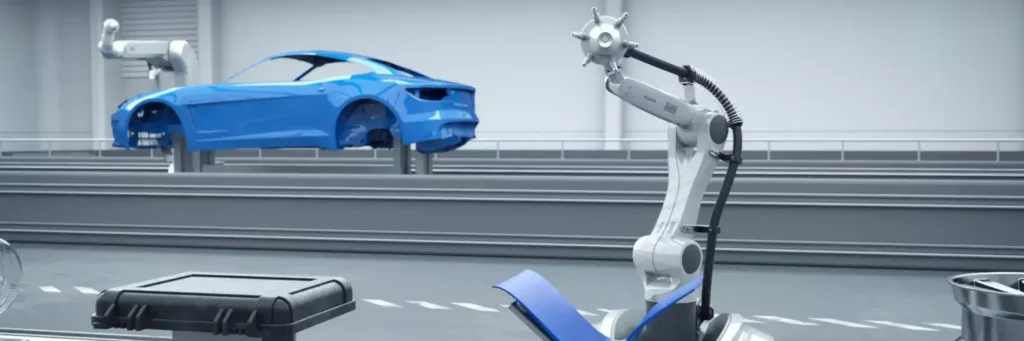
Robotic car painting is an automated spray-painting process where programmed machines apply primer, basecoat, clearcoat, or other coatings to vehicles and parts. The robot controls spray distance, gun angle, speed, overlap, and paint flow based on a planned path.
In automotive factories, robotic painting is often used inside sealed paint booths. These systems may use electrostatic spray, where charged paint particles are drawn toward the vehicle body. This helps more paint reach the surface and less paint become overspray. The main value of robotic car painting is repeatability. Once the process is set correctly, the robot can follow the same movement again and again. That is hard for even a skilled painter to match during a long shift.
Spray quality depends on several variables, including spray distance, pressure, viscosity, temperature, humidity, and gun speed. Testing on robotic spray painting has shown that viscosity and temperature can strongly affect thickness variation, and speed and temperature can affect surface roughness. That is why controlled spray settings matter so much in automotive painting.
Robotic car painting is most common in vehicle manufacturing, but it is not limited to factory lines. Shops that paint repeat parts, bumpers, panels, wheels, fleet vehicles, or commercial components may also benefit from a more controlled spray process.
What Is Manual Car Painting?
Manual car painting is the process of applying automotive paint by hand with a spray gun. The painter controls the spray pattern, overlap, distance, pressure, speed, and blend area through skill and experience.
This method is still widely used in collision repair, refinishing, restoration, custom paint jobs, motorcycles, small panels, and bumper work. A skilled painter can read the surface in real time. They can see how the paint is laying down, adjust the distance, widen a blend, slow the pass, or change technique when the panel shape demands it.
Manual painting is especially useful when the work is not predictable. A repaired door may have old paint, primer spots, body filler, sanding marks, and small shape changes. A painter can react to those details in a way that a standard programmed path may not.
The weakness is variation. Manual results can change from painter to painter, shop to shop, and even from one part of the day to another. Fatigue, lighting, booth airflow, gun setup, and material handling all affect the finish.
That is why manual painting remains valuable, but it also explains why more businesses are interested in automatic car painting for repeat work.
Robotic Car Painting vs Manual Painting: What Is the Main Difference?
The main difference is control. Robotic painting is built around repeatable spray control. Manual painting is built around human judgment.
A robot is strongest when the shape, surface, paint system, and process are planned. It can repeat the same spray angle, distance, overlap, and speed across many vehicles or parts. This makes it well suited for factories, high-volume parts painting, fleet refinishing, and repeat body shop workflows.
Manual painting is strongest when the painter needs to make decisions during the job. That includes custom color work, complex blending, older paint, restoration projects, and repairs that do not follow a fixed pattern.
The two methods should not be treated as enemies. A paint shop can use robotic systems for repeatable spray work and still rely on painters for preparation, color judgment, inspection, correction, and special finishes.
| Factor | Robotic Car Painting | Manual Painting |
| Best use | Repeat work, factories, fleet parts, panels, bumpers, production refinishing | Custom work, complex blending, restoration, one-off repairs |
| Consistency | Very high when set correctly | Depends on painter skill |
| Speed | Strong for volume and repeat parts | Better for small one-off jobs |
| Paint waste | Often lower with tuned settings | Depends on gun setup and technique |
| Safety | Reduces direct spray exposure | Requires strict protective equipment |
| Flexibility | Best with planned work | Best with unpredictable work |
| Setup cost | Higher at the start | Lower at the start |
| Long-term value | Strong where volume and repeatability exist | Strong where craft and judgment matter |
Which Method Gives Better Paint Quality?
Robotic painting usually gives better consistency in repeat production. Manual painting can produce excellent quality too, but the result depends more heavily on the painter, equipment, booth, and surface preparation.
Paint quality is not only about gloss. It includes film thickness, texture, color coverage, adhesion, orange peel control, clearcoat depth, and durability. A finish may look good at first but fail later if the coating is too thin, too thick, uneven, or poorly bonded.
Uniform coating thickness matters because uneven paint can create weak coverage, runs, dry spray, poor gloss, peeling, or extra buildup. Robotic systems can help because they hold spray distance and speed more steadily than a human hand over repeated jobs.
Manual painting can still produce a show-quality finish in the right hands. Many custom cars and restorations are painted manually because the job needs care, sanding between layers, hand masking, and visual judgment.
For repeatable quality, robotic painting has the advantage. For artistic or unusual work, skilled manual painting still has a clear role.
Is Robotic Painting Faster Than Manual Painting?
Robotic painting is usually faster when the same type of job is repeated. Manual painting can be faster for a single repair because there is less setup.
Speed in car painting is not only the time spent spraying. It includes masking, booth use, part loading, color changes, drying, inspection, and rework. A fast spray pass does not help if the panel has to be sanded and repainted.
In a factory or repeat parts operation, robots can work through planned cycles with steady timing. Several robots may paint different areas of the vehicle at once. They do not slow down because of hand fatigue or awkward reach.
In a small body shop, manual painting may be quicker for one fender, one scratch, or one special blend. Programming or staging an automatic process may not make sense for a single unusual job.
The speed advantage depends on volume. For one damaged door, a painter may be faster. For 100 similar bumpers, robotic painting is usually the better fit.
Which Method Uses Less Paint?
Robotic painting often uses less paint when the system is set well. The reason is transfer efficiency, which means how much sprayed paint actually lands on the target surface.
Good robotic paint settings can control flow rate, spray pattern, gun speed, distance, and overlap. That helps reduce overspray and keeps more material on the panel. In some vehicle exterior paint applications, carefully controlled flow rate and robot speed can reach transfer efficiency levels of up to 90%.
Manual painting can also reduce paint use when painters use good equipment and proper technique. HVLP spray guns can cut paint use and overspray, and testing found a 30% increase in the ratio of paint film thickness to paint mass applied when HVLP equipment was used.
The difference is repeat control. A painter may hold the gun slightly farther away, change overlap, or add extra clear to chase gloss. A robot repeats the same path once the settings are right.
For shops that paint repeat parts, reduced waste can become a real business advantage. Less overspray means lower material cost, cleaner booths, fewer filter loads, and fewer defects linked to heavy or uneven application.
Is Robotic Painting Safer?
Robotic painting can be safer because it reduces direct human exposure to paint mist, solvents, and airborne coating particles.
Spray painting can expose workers to harmful substances if ventilation, respirators, gloves, suits, and handling practices are not properly managed. Some automotive coatings need serious protection because breathing paint mist or allowing it onto the skin can create health risks.
Robots can perform the spraying inside the booth while workers remain farther from the spray cloud. People still need to load parts, prepare surfaces, monitor the process, clean equipment, inspect quality, and maintain the system. Yet the most repetitive spray exposure can be reduced.
Manual painting can be done safely, but it demands strict habits. The painter needs the right respirator or air-fed mask, protective clothing, booth airflow, clean filters, and proper training.
This is one of the quiet reasons robotic painting keeps gaining attention. It is not just about speed or shine. It can also make the painting area less punishing for the people who work around it every day.
Which Method Is More Cost-Effective?
Robotic painting is more cost-effective when there is enough repeat work to justify the setup cost. Manual painting is more cost-effective for low-volume, custom, or highly varied jobs.
A robotic painting system costs more at the beginning. The business may need robotic arms, spray equipment, controls, safety systems, programming, booth changes, fixtures, training, and maintenance. That cost makes sense when the system can run enough parts or vehicles to pay back the investment.
Manual painting has a lower starting cost. A shop still needs a booth, compressor, spray guns, mixing system, lighting, sanding tools, filters, and skilled labor. Yet it is easier to start small.
Labor cost changes the picture. Skilled painters are not always easy to find, and training takes time. When one painter controls most of the output, a shop can become limited by that person’s schedule and stamina.
The painting robot market was estimated at $3.1 billion in 2024 and is projected to reach $5.8 billion by 2029, with a 13.1% compound annual growth rate. That growth reflects stronger demand for automation, safety, and repeatable finishing across several industries.
A small custom shop may not need a robotic system. A busy refinishing business with repeat parts may see the math very differently.
When Is Manual Painting Better?
Manual painting is better when the job needs creativity, complex judgment, or a unique approach. A painter can change technique while looking at the surface, lighting, color behavior, and repair area.
Custom painting is the clearest example. Flames, fades, candy paint, pearl layers, airbrushed artwork, racing stripes, and special graphics often need hand control. A painter may build color slowly, sand between coats, retape a line, or adjust the finish based on how the surface looks.
Manual painting is also strong for restoration. Older cars may have panels that are not perfectly straight, previous repairs, unusual materials, or paint systems that need careful handling.
Collision repair is another area where manual skill matters. A paint code gives a starting point, but it does not always match a real car that has been on the road for years. Sun exposure, washing, aging, old repairs, and paint batch differences can change the color.
Manual painting works best for:
- Custom designs
- Classic restorations
- Complex blending
- Small one-off repairs
- Artistic finishes
- Older vehicles
- Jobs where the process changes during the work
Manual painting has not disappeared because real vehicles are messy. Not every job fits a fixed program.
When Is Robotic Painting Better?
Robotic painting is better when the job must be repeated with steady quality. This includes factory painting, parts painting, fleet work, commercial vehicles, and repeat refinishing.
Robots can apply paint with the same speed, angle, distance, and overlap again and again. This reduces variation across panels and helps the shop control coating thickness.
Robotic painting is especially useful for:
- Bumpers
- Doors
- Hoods
- Wheels
- Mirror covers
- Trim pieces
- Commercial vehicle parts
- Fleet panels
- Replacement parts
- Repeat repair workflows
For these jobs, the goal is not artistic freedom. The goal is clean, steady, durable coverage with less waste and fewer surprises.
This is where robotic painting can gently move ahead of manual painting. It does not need to “beat” the painter in every situation. It only needs to remove the variation from the parts of the job that should not vary.
Can Robots Match the Skill of a Human Painter?
Robots can match and often exceed humans in repeatable spray movement, but they do not fully replace human judgment.
A robot is excellent at following a tested path. It can hold a spray gun at a steady distance and move across the surface with controlled speed. That is hard for a person to repeat perfectly through long shifts.
A human painter is better when the surface asks for judgment. Color blending, old clearcoat, faded paint, primer spots, pearl behavior, and repair edges still need a trained eye.
Even in robotic painting, people remain central. Someone has to prepare the surface, set the material, choose the right process, program the system, maintain the spray equipment, check the result, and correct defects.
The best use of robotic painting is not to remove craftsmanship. It is to give craftsmanship a more stable process.
What Paint Defects Can Happen with Each Method?
Both robotic and manual painting can create defects. The causes are different, but the result can be the same: a finish that needs repair.
Robotic defects often come from setup issues. The spray path may be wrong. The part may be positioned poorly. The nozzle may clog. Paint viscosity may change. The robot may move too fast or too slowly. Booth airflow may be uneven.
Manual defects often come from hand movement, gun setup, poor preparation, dust, lighting, or fatigue. A painter may overlap unevenly, hold the gun too far away, move too slowly, or apply clearcoat too heavily.
Common defects include:
- Runs and sags
- Orange peel
- Dry spray
- Thin coverage
- Fish eyes
- Dirt nibs
- Color mismatch
- Metallic mottling
- Clearcoat haze
- Peeling
Robots reduce human variation, but they do not remove the need for process control. Manual painting offers more freedom, but that freedom can create inconsistent results if the painter is rushed or poorly equipped.
Which Is Better for Car Manufacturing?
Robotic painting is better for car manufacturing because factories need speed, repeatability, safety, and consistent finishes across thousands of vehicles.
A factory paint line must produce the same level of quality day after day. A black sedan painted on Monday should not look different from the same model painted on Friday. Robotic systems help by repeating the same spray paths under controlled conditions.
Robots also support data tracking. Paint flow, booth conditions, gun speed, curing time, and quality checks can be measured and adjusted. That helps the plant find causes when defects appear.
Manual painting cannot match robotic repeatability at factory scale. It still has value for correction, inspection, repair, and special cases, but the main spray process belongs to automation in modern vehicle production.
Which Is Better for Collision Repair?
Manual painting still plays a major role in collision repair because every damaged vehicle has its own story. Yet robotic painting can help collision centers when the work includes repeat panels, bumpers, fleet parts, or high-volume refinishing.
A collision repair painter often needs to match aged paint, blend into nearby panels, and adjust for surface repairs. Metallic and pearl colors can be especially sensitive because flake direction changes with spray technique.
That said, not every collision job is a hand-crafted blend. Many shops paint replacement bumpers, doors, hoods, and small parts every week. These repeat jobs can benefit from robotic control.
The future of collision repair may not be purely manual or purely robotic. A stronger model is a shop where painters handle judgment-heavy work and automatic systems handle repeatable spray application.
Which Is Better for Custom Car Painting?
Manual painting is better for custom car painting because custom work often needs creativity, hand masking, visual decisions, and artistic control.
A custom painter may use candy colors, pearls, fades, graphics, airbrush work, or layered effects. These finishes often change as the work develops. The painter may adjust based on light, depth, design, and customer taste.
Robotic painting can still help with some parts of custom work. It can apply a smooth base layer or clearcoat when the shape and process are predictable. But for detailed artistic work, a skilled painter remains hard to replace.
Custom painting is where the human hand still has a strong emotional value. The customer is not only buying coverage. They are buying personality.
Is Robotic Painting More Environmentally Friendly?
Robotic painting can be more environmentally friendly when it reduces overspray, paint waste, rework, and booth contamination.
Paint waste is not only a cost problem. Overspray can add to filter waste, booth cleaning needs, solvent handling, and emissions control. Better transfer efficiency means more paint lands where it should.
Improving transfer efficiency in spray coating can reduce coating waste, VOC emissions, hazardous waste fees, coating costs, and worker exposure. Moving from 30% transfer-efficient equipment to 65% transfer-efficient equipment can reduce material use by about 50%.
Robotic systems can support this goal because they repeat low-waste spray settings once tuned. Manual painters can also reduce waste with good HVLP guns and careful technique, but the result depends more on the individual.
Robotic painting is not automatically clean. It still needs good booth airflow, maintenance, filters, material handling, and proper settings. The benefit comes from controlling the whole process.
What Are the Limits of Robotic Car Painting?
Robotic car painting has limits. It costs more to install, takes planning, and needs skilled setup. It works best when the shop has repeat work or enough volume.
A robot cannot fix poor surface preparation. It cannot make dirty panels clean. It cannot correct the wrong paint mix. It cannot judge a difficult blend unless the system and process are built for that job.
Robots also need maintenance. Spray nozzles, hoses, pumps, sensors, filters, and software all need attention. If the robot is poorly maintained, it can repeat bad work very efficiently.
That is why robotic painting should be seen as a system, not just a machine. It needs trained people, clean workflow, good materials, and a clear reason to exist in the shop.
What Are the Limits of Manual Car Painting?
Manual painting has limits in consistency, speed, exposure, and labor dependence. Even a talented painter cannot repeat the exact same motion with machine-level control for hundreds of parts.
Fatigue matters. A painter spraying large jobs or working long hours may change wrist angle, speed, or overlap without noticing. Small changes can affect thickness, gloss, and texture.
Manual painting also depends on the availability of skilled workers. A shop may struggle when its best painter is absent, overloaded, or leaving. Training new painters takes time, and mistakes can be expensive.
Worker exposure is another concern. Manual spray work places people closer to paint mist and airborne materials. Good safety practices reduce risk, but automation can reduce direct spray time.
Manual painting will remain valuable, but shops that rely only on manual spraying may face growing pressure as material costs, labor shortages, and customer expectations rise.
Robotic Car Painting vs Manual Painting Cost: What Should a Business Choose?
A business should choose robotic painting when it has repeat work, high material use, rework problems, labor pressure, or a need for steadier output. It should choose manual painting when jobs are low-volume, artistic, highly varied, or difficult to program.
For a car factory, robotic painting is usually the right answer. The work is repeated often enough to justify the investment.
For a small restoration shop, manual painting may remain the best fit. The work is detailed, varied, and often personal.
For a body shop, parts painter, fleet refinisher, or commercial vehicle facility, the answer may sit in the middle. If the shop paints similar parts again and again, automatic painting may be worth serious attention.
The decision should be based on real workflow questions:
- How many repeat parts are painted each week?
- How much paint is lost as overspray?
- How often does rework happen?
- Is painter labor hard to find?
- Are booth delays slowing the business?
- Are customers asking for faster turnaround?
When those problems keep showing up, robotic painting becomes less like a luxury and more like a practical business tool.
Which Method Gives the Best Finish Overall?
The best finish comes from matching the method to the job. Robotic painting gives the best results when repeatability, controlled spray movement, and process stability matter. Manual painting gives the best results when the work needs creativity, blending, and close judgment.
For factory production, repeat parts, and high-volume refinishing, robotic painting is hard to beat. It gives steady application, less variation, and better control over paint use.
For one-off custom work, complex restoration, and difficult collision blending, a skilled painter still brings value that a standard robot cannot fully copy.
The smartest answer is not to praise one method and dismiss the other. The smarter answer is to use automation where it improves the process and human skill where the job needs judgment.
The Best Paint Results Come from Skill Supported by Better Systems
Robotic car painting and manual painting both have a place. Manual painters bring experience, color sense, repair judgment, and creative control. Robots bring repeatability, safer spray conditions, steadier paint use, and more predictable results across repeat work.
For businesses that handle the same type of painting again and again, robotic and automatic car painting is becoming harder to ignore. It can reduce variation, support busy teams, lower waste, and create a more controlled path to a clean finish.
The future of car painting is not about removing people from the craft. It is about giving skilled people better tools, cleaner processes, and more reliable systems. When the job needs judgment, the painter matters. When the job needs repeatable control, robotic painting often gives the better result.