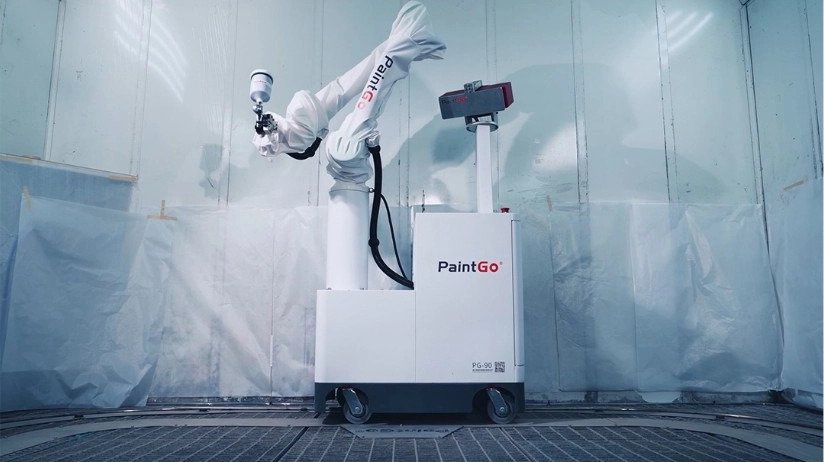
Car painting robots for collision repair centers usually cost far less than the giant robotic paint systems used in vehicle manufacturing plants, but the final price can still vary widely. A small body shop may look at a compact robotic refinish setup, while a high-volume MSO location may need a more complete system with scanning, software, booth changes, training, and service support.
The real question is not only, “How much does a car painting robot cost?” It is, “What am I actually paying for, and will it make sense inside my paint department?”
For most repair businesses, the price is shaped by the robot’s reach, spraying accuracy, booth fit, programming method, installation work, training, maintenance, and the type of jobs the shop wants to run. A robot that paints bumpers and panels in a small booth is not priced the same as a system built for constant production. The smartest shops judge cost against labor pressure, paint waste, booth cycle time, finish consistency, and the number of repair orders moving through paint each week.
How much does a car painting robot cost for an auto body shop?
A car painting robot for an auto body shop can start around the lower five-figure range for basic or compact systems, while more complete robotic refinish setups can move into the mid-five-figure or six-figure range. The price depends on whether the shop buys a simple robot arm, a cobot-style sprayer, or a full paint system with scanning, software, installation, and support.
This is where many shops get misled. A robot arm price is not the same as a working paint department price.
A supplier may advertise a low starting price, but that number may not include the spray package, booth integration, safety work, software, training, gun setup, filtration changes, or service plan. In real collision repair use, those pieces matter more than the arm alone.
For a small shop, the better way to think about cost is by asking what role the robot will play. Will it paint loose panels? Bumpers? Blend panels? Full sides? Complete vehicles? Will it work beside a painter, or replace part of the spray work inside the booth? Will the painter still handle masking, prep, color checking, and final inspection?
A compact system built for body shops may fit a standard booth and use familiar spray guns. A more advanced system may scan the vehicle, read panel geometry, and create spray paths with less manual teaching. That extra capability raises the upfront cost, but it can also reduce the time needed to prepare jobs for robotic spraying.
Why are body shop robots priced differently from factory paint robots?
Body shop robots are priced differently because collision repair is not the same as new-car manufacturing. A factory paints repeatable vehicle bodies in a controlled production line. A collision repair center paints different makes, panels, colors, repair sizes, blends, bumpers, used parts, repaired panels, and partial jobs every day.
That difference changes the robot design.
Factory robots are built around repeatability at massive scale. The vehicle body arrives in a known position. The robot knows the model, panel shape, spray path, and production rhythm. The whole paint line is designed around automation.
A collision repair robot has to deal with variation. One job may be a bumper cover. The next may be a quarter panel blend. The next may be a hood and fender on a vehicle that has already been masked and repaired by hand. That means the robot needs flexible scanning, simpler setup, and a workflow that fits a repair shop instead of a factory line.
This is also why the wrong comparison can damage the buying decision. A shop owner should ask “What system fits a repair booth, supports refinish work, and can be operated by my paint team without slowing down production?”
What makes the biggest difference in car painting robot price?
The biggest cost drivers are robot capability, booth compatibility, scanning and software, installation, training, service support, and the type of paint work the system can handle. A cheaper machine may spray paint, but a shop-grade system has to repeat quality across real repair jobs.
The price difference often comes down to what happens before the trigger is pulled.
A human painter looks at a panel and adjusts instinctively. Distance, overlap, wrist angle, speed, edge control, and wetness are read in real time. A robot needs hardware and software to copy those decisions. The more the system can read, adjust, and repeat, the more it tends to cost.
A basic setup may need more manual programming. A higher-priced system may scan contours, build spray paths, control gun movement, and reduce the amount of teaching needed from the operator. That added intelligence can matter for shops that want steady throughput instead of a “robot project” that only one person understands.
Robot reach and arm size affect the price
Robot reach affects price because the arm must cover the type of work the shop wants to paint. A robot used only for bumpers and small panels can be smaller. A robot expected to spray hoods, doors, bedside panels, quarter panels, and larger vehicle sections needs more reach, better movement, and stronger control.
In a collision center, reach is not only about length. It is about usable reach inside the booth.
A robot may have enough arm length on paper, but still struggle if the booth is tight, the vehicle is positioned poorly, or the robot cannot move around masking stands, carts, doors, or booth walls. A compact robot can be attractive for city shops where booth space is limited, but it must still reach the panels that make up the shop’s daily mix.
This is why shops should not buy based on arm length alone. They need to map real repair orders. Count how many jobs are bumpers, doors, hoods, fenders, blends, multi-panel sides, and full resprays. The robot should match the work that actually clogs the paint department.
A larger arm may cost more, but it can be the better choice for a shop that paints many side hits and larger repairs. A smaller arm may be the better financial fit for a shop that wants to move bumpers, loose panels, and repeatable refinish work through the booth with less painter strain.
Booth size and retrofit work can change the final number
Booth fit can add cost because the robot has to work safely inside the shop’s existing paint area. Some systems are made to fit standard spray booths, while others may require booth changes, power upgrades, air connections, mounting work, ventilation checks, or floor planning.
This is one of the most practical price factors for small shops.
Many collision centers do not have extra booth capacity. The paint booth is already the bottleneck. Adding a robot that requires major reconstruction can create downtime and raise the true cost beyond the equipment invoice.
Before a shop gets serious about a quote, it should measure booth length, width, height, door clearance, airflow layout, lighting, wall space, floor condition, and the route used to move vehicles and parts in and out. A system that fits an existing booth with limited changes may be more affordable than a cheaper robot that needs expensive building work.
Power and air also matter. A robot may need a reliable electrical supply, dry compressed air, gun connections, control cabinet space, and safe cable routing. These are not exciting line items, but they decide whether the installation feels clean or becomes a daily frustration.
Scanning and software can raise the upfront cost
Scanning and software raise the price because they help the robot understand the surface it is painting. In repair work, every vehicle and repair area can be different, so a system that can scan contours and create spray paths has more value than a robot that needs heavy manual teaching for each job.
This is where body shop robotics gets serious.
A robot can only spray well if it knows where the panel is, how far the gun should sit from the surface, where edges start and stop, and how each pass should overlap. A painter does that with experience. A robot needs sensors, programming, and motion control.
Some systems use machine vision or 3D scanning to read the shape of the panel. Others depend more on pre-set paths, manual positioning, or operator input. The more automatic the path creation becomes, the more the system may cost. Yet that extra cost can reduce setup time, especially in a shop where every repair is different.
Software also affects long-term use. A clean operator interface can make the robot easier for painters to accept. A confusing interface can turn the robot into a machine that sits idle unless one trained person is available.
Spray gun compatibility matters more than many buyers expect
Spray gun compatibility affects price because some robots work with familiar refinish guns, while others need a dedicated applicator, special fluid delivery, or a custom spray package. The more specialized the spray setup, the more the shop may spend on parts, training, and support.
Painters care about guns for a reason.
Atomization, fan pattern, fluid delivery, air pressure, clearcoat feel, and metallic control all matter in collision repair. If a robot uses equipment the shop already trusts, adoption may be easier. If the robot requires unfamiliar spray hardware, the shop needs time to test color, texture, coverage, edge control, and clear appearance.
The cost is not just the gun. It can include fluid lines, regulators, cleaning routines, gun mounts, quick-release parts, and spare components. A shop should ask whether the robot can run basecoat and clearcoat, whether it supports the shop’s paint brand, and how cleaning works between colors.
A cheap robot with a poor spray setup can cost more through rework than a higher-priced robot that lays material consistently.
Installation and training are part of the real price
Installation and training affect cost because a robot has to be placed, tested, calibrated, and taught to the team. A shop is not only buying hardware. It is buying a new paint workflow.
The best installation plan starts before the robot arrives.
The supplier should understand booth layout, job mix, painter workflow, safety needs, and production targets. The shop should know who will operate the system, who will maintain it, and who will approve finished work during the early learning period.
Training is especially valuable in collision repair because experienced technicians do not want generic automation talk. They need practical answers. How does the robot handle a bumper edge? Can it spray a repaired door and blend into the next panel? How does it handle metallic orientation? What happens when a panel is positioned slightly differently? How much masking changes?
Good training helps the team trust the system. Poor training creates resistance, slow cycles, and blame when the finish does not match expectations.
Maintenance and service plans affect ownership cost
Maintenance affects the cost because a paint robot works in a harsh environment. Overspray, solvents, compressed air, movement, booth heat, and daily production all put stress on equipment.
The ownership cost should include preventive service, spare parts, software updates, calibration, gun cleaning, filters, seals, hoses, and support response time.
A shop should ask direct questions before buying. How often does the robot need service? What can the shop do in-house? Which parts are stocked locally? How fast can a technician respond? Is remote support included? Are software updates included? What happens if the system goes down during a busy week?
For a collision center, downtime is expensive. If the paint department stops, delivery dates slip. A low purchase price can lose its shine fast if support is weak or parts take too long to arrive.
Job mix changes whether the robot is worth the price
Job mix affects value because a robot makes the most sense when it is matched to repeatable paint work. A shop that paints many bumpers, doors, hoods, fenders, and multi-panel repairs may see more value than a shop with low paint volume or highly irregular custom work.
The robot does not have to paint every job to earn its place.
In many shops, the goal is to remove pressure from the paint department. If the robot handles predictable spray tasks, the painter can focus on color decisions, blends, difficult repairs, quality checks, and exceptions. That can help a shop keep work moving even when skilled refinish labor is hard to find.
A shop with only a few paint jobs per week may struggle to justify the cost. A shop with strong DRP volume, fleet work, bumper programs, dealer work, or steady panel repair may have a stronger case.
The better question is not, “Can the robot paint?” It is, “Which jobs will we feed it every week?”
Production volume has a direct effect on ROI
Production volume affects ROI because the robot has to be used enough to pay for itself. A high-volume collision center can spread the cost across more repair orders, while a low-volume shop carries the same payment over fewer jobs.
A simple ROI review should look at labor hours, paint material use, booth time, rework, overtime, cycle time, and the number of jobs delayed at paint.
If a shop is losing work because paint is backed up, automation may help protect revenue. If a shop already has unused booth time and no staffing issue, the case may be weaker.
Paint and material inflation also makes this discussion more serious. Refinish brands reported paint and material cost increases in 2025, and even small waste reductions can matter when materials keep rising. A robot that improves transfer efficiency, reduces overspray, and lays down more consistent film build can support margin control, but only if the shop’s workflow lets it run enough jobs.
Labor cost and painter shortage shape the buying decision
Labor pressure affects robot pricing because shops are not only comparing equipment cost against wages. They are comparing it against hiring risk, overtime, training time, turnover, painter fatigue, and the cost of having vehicles stuck before delivery.
A good painter is not easy to replace.
The point of a painting robot in collision repair is not to pretend skilled painters do not matter. In many shops, the robot is most valuable when it gives the painter a stronger tool. The painter still owns judgment: prep quality, color match, blend strategy, substrate review, masking standards, and final approval.
The robot can take over repetitive spraying, reduce time inside the booth, and help keep output steadier when staffing is thin. That matters because collision repair has been dealing with skilled labor pressure, especially in technical roles such as paint, body, EV, and ADAS-related repair work.
For shop owners, the labor question is personal. It is not only about payroll math. It is about whether the paint department can keep promises when one painter is out, when overtime is high, or when the next experienced hire is hard to find.
Safety features and compliance add cost but reduce risk
Safety features affect cost because robotic spraying involves movement, compressed air, coatings, solvents, and hazardous aerosols. A proper system needs safe controls, emergency stops, guarding or defined work zones, booth compatibility, and procedures that keep workers out of the spray environment during operation.
Automotive coatings can expose workers to overspray and isocyanates, especially during spray application. That is one reason shops invest in booths, ventilation, PPE, respirators, and safe work practices.
A robot may reduce the time a painter spends inside the booth while spraying, but it does not remove the shop’s safety duties. Workers still handle coatings, mix materials, clean guns, enter the booth after spray cycles, and manage booth clearance times.
This is why a cheaper setup without a serious safety plan should make a shop cautious. The right system should fit the booth, respect spray hazards, and come with clear operating procedures. Safety is part of the cost because it protects people and keeps the shop running.
Paint savings can help offset the robot cost
Paint savings can help offset the cost when the robot improves spray distance, overlap, speed, and consistency. The savings come from less overspray, steadier film build, fewer redo jobs, and better material control.
Material savings are not automatic. They depend on the robot, the spray setup, the painter’s workflow, and the type of work being sprayed.
A skilled painter may already be efficient. The robot has to match or improve that standard to create real savings. Where robots can help is repeatability. They do not get tired late in the day. They do not vary as much from painter to painter. They can follow a programmed pattern with the same gun distance and pass speed over and over.
For shops fighting high material bills, this matters. Paint, clear, reducers, hardeners, masking products, abrasives, cups, and booth supplies all affect gross profit. Even small gains can add up across hundreds of panels.
Cheap robots can become expensive if they do not fit collision repair
A cheap paint robot can become expensive if it cannot handle real collision repair work. Low upfront cost means little if the system creates slow setup times, poor support, finish problems, painter resistance, or booth downtime.
Some robots are made for general spraying, furniture, metal parts, walls, or simple industrial work. That does not always translate into refinish quality on repaired vehicles.
Collision repair has tight finish expectations. Texture, blend control, color orientation, clear appearance, edge coverage, and repair-area variation all matter. If the robot cannot support that level of work, the shop may spend more time correcting problems than it saves.
Before buying, shops should request demos on actual repair-style jobs. Not just a flat test panel. A bumper cover, a repaired door, a blend panel, a hood, and an edge-heavy part will tell more about the system than a clean marketing video.
Financing, warranty, and support terms also affect the total cost
Financing, warranty, and support terms affect the total price because many shops will judge the robot by monthly cost, not just purchase price. A system that looks expensive upfront may be easier to justify if the payment fits production gains. A cheaper unit may be riskier if warranty coverage is weak.
A shop should compare:
- Equipment price
- Installation cost
- Training cost
- Freight and setup
- Warranty length
- Service response time
- Software fees
- Spare parts
- Maintenance plan
- Financing terms
- Expected booth downtime during installation
This gives the shop a truer number.
The best buying decision usually comes from matching the monthly cost against a conservative production estimate. Do not assume perfect use from day one. Build the math around realistic adoption, training time, and the jobs the team will actually run through the robot.
What should a small collision center ask before buying?
A small collision center should ask whether the robot fits the booth, the job mix, the paint system, the staff, and the shop’s financial target. The right questions reveal whether the price is fair or whether hidden costs are waiting.
Here are practical questions worth asking before signing:
- What types of repair jobs can the robot paint well?
- Can it handle bumpers, blends, panels, and full sides?
- Does it work inside my current booth?
- What booth size does it need?
- What electrical, air, and mounting work is required?
- Does it use familiar spray guns?
- How does it build spray paths?
- Does it scan the panel or need manual teaching?
- How long does setup take per job?
- Who trains my painters?
- What support is included?
- What parts are stocked near me?
- What maintenance can my team perform?
- What happens if the system goes down?
- Can I see it paint repair-style jobs before buying?
These questions keep the conversation grounded in shop reality. A robot should not be bought because it looks modern. It should be bought because it solves a production, labor, quality, or margin problem inside the paint department.
When is a car painting robot worth the price?
A car painting robot is worth the price when the shop has enough paint volume, a clear booth bottleneck, labor pressure, material waste concerns, or consistency issues that the robot can realistically improve. It is less likely to make sense for a low-volume shop that does not have a paint department problem.
For many collision centers, the strongest case comes from a mix of factors.
A shop may be paying overtime, struggling to hire painters, losing days in the paint queue, seeing material bills rise, and trying to keep cycle time under control. In that setting, the robot is not just equipment. It becomes a production tool.
Still, the shop must stay honest. The robot will not fix weak prep. It will not solve poor estimating. It will not make bad booth airflow disappear. It will not replace the judgment of a skilled painter. It works best in a disciplined shop where repair planning, prep, masking, color work, and booth scheduling are already taken seriously.
The best price is the one that fits the way your shop actually paints
Car painting robot cost is not a single number because no two collision repair centers run the same paint department. One shop needs a compact system to support bumper and panel volume. Another needs a more complete robotic refinish setup with scanning and stronger software. Another may not be ready yet.
The right price is the one tied to real shop math.
Look at your booth flow. Look at painter availability. Look at how many jobs wait for paint. Look at material waste, rework, overtime, and delivery delays. Then compare the robot against those costs, not against factory automation or marketing claims.
A car painting robot should make the paint department more predictable, not more complicated. When the system fits the booth, the staff, and the repair mix, the cost becomes easier to judge. It stops being a shiny equipment purchase and starts looking like a serious production decision.