Refinish has always been one of the hardest areas of a collision repair center to scale. A shop can add estimators, add body techs, improve parts handling, or tighten repair planning, but paint still depends on booth capacity, painter skill, material control, surface prep quality, and timing.
That is why robotic car painting is getting more attention from collision repair centers. It can help shops create more repeatable spray results, reduce overspray, control material use, improve booth planning, and support better labor allocation. The return depends on volume, workflow discipline, repair mix, staff training, and how often the system is used.
For a high-volume collision center, robotic painting is not just a technology purchase. It is a production decision. If it is placed into a weak process, it will expose the weak points. If it is placed into a disciplined paint operation, it can help that operation become more consistent, measurable, and easier to scale.
What does robotic car painting mean inside a collision repair center?
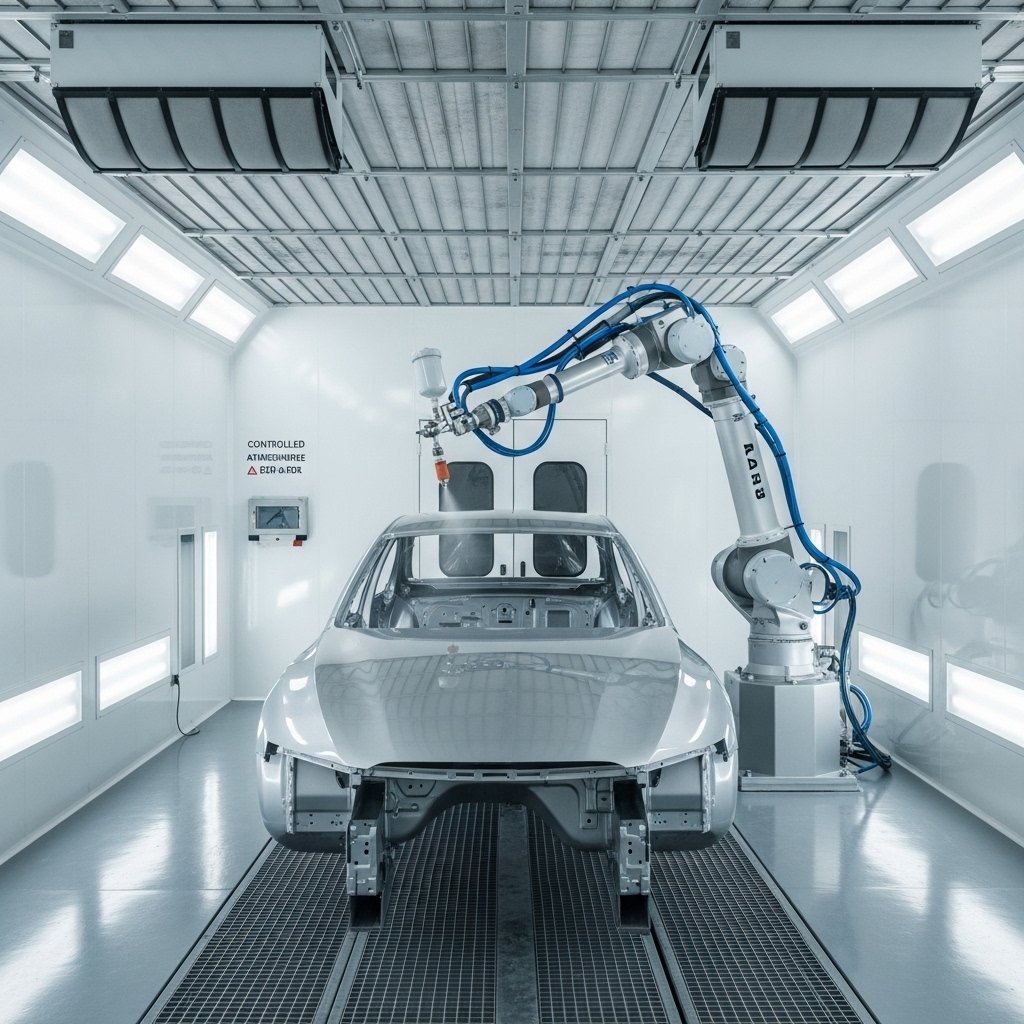
Robotic car painting in a collision repair center means using an automated spray system to apply coating with controlled motion, spray distance, overlap, speed, and pattern. It does not mean the whole refinish department runs without skilled people.
In collision repair, every job is different. Panel damage, substrate condition, repair size, blend area, color behavior, masking access, booth timing, and customer expectations change from vehicle to vehicle. A robot does not remove those variables from the job. It gives the shop a more controlled way to handle the spray application part of the process.
The strongest use case is repeatable refinish work where spray consistency, film build control, and material transfer matter. That may include panels, parts, repaired areas, fleet work, bumper covers, doors, hoods, fenders, or other jobs that fit within the robot’s setup and range.
Human judgment is still involved before and after application. Technicians still handle repair planning, prep, primer decisions, substrate correction, masking, color selection, spray strategy, finish review, and any required denib or polish work.
The better way to view robotic painting is “robot plus painter, under a tighter process.” The robot handles repeatable motion. The painter and production team handle judgment.
Why are collision repair centers considering robotic painting now?
Collision repair centers are considering robotic painting because the refinish department is under pressure from several sides at once: skilled labor shortage, higher material costs, cycle time goals, insurer expectations, and more complex vehicle finishes.
Many shops already know the pain. The painter is booked. The booth is full. The vehicle is ready, but the finish operation controls the delivery date. A small delay in paint can push reassembly, calibration, detailing, and delivery into another day.
That delay is not just a scheduling problem. It touches gross profit, rental length, customer satisfaction, DRP scorecards, staff overtime, and total shop output.
The technician shortage across collision repair is one of the strongest reasons automation is entering the conversation. Experienced refinish technicians are hard to replace. Training a new painter takes time, and a shop cannot build senior-level judgment overnight. Robotic painting will not solve that alone, but it can help a shop use experienced painters more carefully.
Instead of having top painters spend every minute on repeatable spray motion, the shop can move some of their value toward process control, job setup, quality review, difficult blends, problem colors, and training. That is where experienced judgment carries the most value.
Paint material cost is another driver. Modern refinish materials are expensive, and small losses across many repair orders become real money. Overspray, poor overlap, inconsistent gun speed, wrong distance, or over-application may not seem large on one job. Across a month or a year, they can affect margin.
Robotic systems are attractive because they bring the same motion logic to each job that fits the system. The gun path, distance, overlap, and speed can be repeated far more closely than manual motion across long production days.
Benefits of robotic car painting for collision repair centers
Robotic painting can give collision repair centers better control over repeatable spray work. The main value is not that a robot paints “better” than a skilled painter in every case. The value is consistency, repeatability, and process control when the work is suited to automation.
More consistent spray application
Consistent application is one of the biggest reasons collision centers consider robotic painting. A robot can maintain programmed distance, angle, path, speed, and overlap with less variation from job to job.
Manual painting depends on skill, stamina, booth conditions, job complexity, and the painter’s rhythm. A good painter controls these variables well, but no human motion is identical every time. Over a long day, even small changes in speed, distance, or overlap can affect film build and finish quality.
A robotic system is built around repeatable movement. Once the job is set correctly, it can follow the same path with the same motion pattern. That helps reduce variation in coating thickness, especially on jobs where the surface geometry and access points are suitable.
This does not make surface prep less important. In fact, it makes prep quality more visible. A robot can apply coating consistently, but it cannot make poor featheredge work, weak masking, contamination, or bad substrate correction disappear.
Better material control and less overspray
Robotic painting can help reduce material waste because spray application can be controlled more tightly. Gun speed, distance, fan pattern, overlap, and fluid delivery can be repeated with a level of control that is hard to maintain manually across every job.
In refinish work, waste often hides in familiar places. A little extra basecoat to chase coverage. A little more clear to feel safe. A little overspray from angle changes. A little material lost because the painter had to adjust mid-pass. On a single job, that may not look serious. Across hundreds of repair orders, it affects paint and materials gross profit.
Transfer efficiency is a key idea here. The more coating that lands where it should, the less material is lost into the booth. Conventional spray equipment could transfer only a portion of sprayed material to the surface, with much of the remainder becoming overspray. Painting robots can improve that number when gun distance, flow rate, atomization, and robot speed are controlled together.
Collision centers should not treat material savings as automatic. The result depends on setup, part shape, spray equipment, paint system, booth airflow, programming, and operator training. But when those parts are managed well, robotic painting can make material use more predictable.
Better use of senior painters
A strong painter is more than a person holding a spray gun. That person understands color behavior, substrate risk, blend strategy, application timing, product limits, texture, lighting, and finish expectations.
That experience is too valuable to spend only on repetitive motion.
Robotic painting can help a shop move senior painters into higher-value roles. They can oversee setup, review color strategy, train younger staff, check prep quality, monitor output, and handle complex jobs that still need manual skill. The robot can take on more repeatable spray work, while skilled people stay in control of decisions.
This can be especially useful in shops where one or two painters carry too much of the production load. When the refinish department depends on a small number of people, vacation, illness, turnover, or burnout can create serious risk. Automation can reduce some of that dependence, as long as the shop has a clear process around it.
More predictable booth planning
Booth planning is one of the quiet profit drivers in collision repair. The booth does not make money when work is waiting, work is blocked, or jobs are poorly grouped. The booth makes money when the right jobs move through at the right time with minimal rework and delay.
Robotic painting can support booth planning because cycle behavior becomes easier to measure. A robot can follow a repeatable spray process, which helps the production team plan certain job types with more confidence.
That does not mean every repair order becomes predictable. Supplements, parts delays, prep issues, color problems, and quality checks can still disturb the day. But for jobs that fit the system, robotic application can reduce one layer of variability inside the booth.
For high-volume centers, that predictability can matter as much as speed. A slightly faster process is useful. A process that is repeatable enough to schedule around may be even more useful.
Lower rework risk when upstream process is strong
Rework is expensive because it steals time from future work. It uses more material, blocks the booth, adds labor, delays delivery, and frustrates staff.
Robotic painting can reduce some rework risk by keeping spray movement consistent. When film build and overlap are controlled, the chance of application-related variation may drop. This can help with finish uniformity, coverage control, and texture consistency.
But this benefit has a condition: the upstream process must be strong.
If prep is rushed, masking is weak, parts are dirty, color verification is poor, or booth conditions are not controlled, a robot will not save the job. The robot may apply paint consistently over an inconsistent foundation.
Collision centers should be honest about this before buying any system. Robotic painting rewards process discipline. It does not replace it.
Where does robotic painting fit into the collision repair workflow?
Robotic painting fits into the refinish stage of the collision repair workflow, mainly around controlled spray application. It should be placed after repair planning, body repair, prep, masking, color work, and job setup are already under control.
A practical workflow may look like this:
Repair planning and blueprinting come first. The shop identifies repair scope, panels, blend needs, parts, repair methods, and refinish operations.
Body repair and substrate correction follow. Metal, plastic, filler, primer, sanding, and panel preparation still need skilled hands and trained eyes.
Masking and booth readiness come next. Robotic application needs clean work, clear access, safe positioning, and the right spray path. Poor masking creates the same problems it would in manual painting.
Color selection and paint mixing remain a key human-led stage. The shop still needs accurate color verification, variant selection, spray-out review where needed, and product handling based on the paint system.
Robot setup happens after the job is ready. Depending on the system, this may involve scanning, part recognition, manual input, stored programs, or technician-guided path setup.
Depending on the system, this may involve scanning, part recognition, manual input, stored programs, or technician-guided path setup. The goal is to define the surface area, gun path, spray parameters, and application sequence.
Research into autonomous robot path generation shows why surface shape, path planning, and coverage logic are central to coating automation.
Spray application is where the robot performs the controlled work. The system applies coating according to the programmed path and settings. The operator still monitors the process and stays responsible for the job.
Flash, curing, and booth timing remain part of the normal refinish plan. A robot does not remove product data sheet requirements or booth process discipline.
Inspection follows. The finish still needs review under proper lighting. Any dirt nibs, texture issues, edge concerns, color mismatch, or defects must be addressed before reassembly.
Reassembly, calibration, detail, and delivery continue as usual.
This workflow shows why robotic painting is not a plug-in fix for the whole shop. It sits inside a larger production system. The better that system works, the more value automation can return.
What ROI actually depends on
ROI from robotic painting depends on how much suitable work the system handles, how it changes labor use, how much material control improves, how it affects booth output, and how well the shop avoids rework. There is no honest single number that applies to every collision center.
A shop should look at ROI through several practical questions.
How many paint hours does the shop produce each month?
How many jobs are suitable for robotic application?
How often is the booth waiting on people, and how often are people waiting on the booth?
What is the current paint and materials gross profit?
How much rework is tied to application issues?
How much senior painter time is spent on repeatable spray work?
How much does the system cost to buy, lease, install, train, maintain, and support?
How many hours per week will the robot actually be used?
The final question may be the most revealing. A robotic painting system used a few times per week is hard to justify unless the shop has a special use case. A system used as a real production asset has a much stronger path toward payback.
Labor ROI
Labor ROI does not always mean reducing headcount. In many collision centers, the better case is labor reallocation.
If the shop is short on experienced painters, the goal may be to protect their time. If robotic painting allows one senior painter to oversee more throughput, reduce overtime, support trainees, or keep work moving during busy weeks, that has value.
The shop should measure how painter time changes before and after adoption. If skilled painters simply spend the same amount of time around the booth without any change in output, the labor case will be weak. If the system helps the department produce more finished work with the same team, the case becomes stronger.
Material ROI
Material ROI comes from reducing waste, improving transfer, and making application more consistent. Paint and clear waste do not always show up clearly in job-level numbers, so the shop may need to track usage over time.
A useful starting point is paint material cost per refinish hour, paint material cost per repair order, and gross profit on paint and materials before installation. After robotic painting is active, the shop can compare trends across similar work mix.
The key is to avoid guessing. A robotic system may feel more controlled, but ROI needs numbers. The shop should track gallons, mixes, waste, supplements, rework, and material margin over a fair sample of jobs.
Booth ROI
Booth ROI depends on whether robotic painting helps the shop increase sellable output or reduce delays. A booth is one of the most expensive production areas in the facility. Any improvement in booth usage can affect the whole operation.
If robotic application creates more predictable spray times for certain jobs, production managers can plan better. If it reduces rework, it frees booth time. If it allows more jobs to move through without waiting for a senior painter, it may support higher output.
The shop should track booth cycle time, booth loads per day, refinish hours per booth cycle, and delayed jobs caused by paint department capacity.
Quality ROI
Quality ROI is tied to reduced rework, fewer defects, and more consistent delivery standards. It can be harder to calculate than labor or material savings, but it still matters.
A shop may see value through fewer redo panels, fewer delivery delays, fewer customer complaints, less denib and polish time, or fewer internal quality holds. These numbers should be tracked before and after adoption.
Robotic painting should not be judged only by how fast it sprays. A stable finish process that reduces avoidable mistakes can protect profit in ways that do not always show up on the first invoice.
Robotic painting is not a shortcut for weak process
Robotic painting performs best in a collision repair center that already has disciplined prep, clean workflow, stable booth habits, and strong quality control. If the current process is inconsistent, automation may make those gaps easier to see.
This is where some shops get disappointed. They expect automation to fix delays that are actually caused by poor repair planning, weak parts management, rushed masking, inconsistent prep, or unclear paint department scheduling.
A robot cannot fix a vehicle that entered the booth before it was ready.
It cannot solve a color decision that was never checked.
It cannot make a dirty environment clean.
It cannot turn a poor repair foundation into a premium finish.
It cannot replace the judgment of an experienced refinish professional on every edge case.
That is not a weakness of robotic painting. It is a reminder that automation needs a process around it. The shops that gain the most are usually the ones willing to map the workflow, standardize setup, train staff, track KPIs, and treat the robot as part of production rather than a side tool.
Which collision repair centers are the best fit?
Robotic car painting is usually a better fit for collision repair centers with enough refinish volume, enough repeatable work, and enough process discipline to keep the system active. High-volume shops and MSO locations often have the clearest use case.
A shop may be a strong fit if the paint department is a regular bottleneck, painter capacity limits output, booth usage is tracked, paint material margins are under pressure, and the production team already works from clear repair plans.
Fleet repair work can also make sense because repeatability is often higher. Similar panels, similar colors, similar repair patterns, or predictable work types can give the robot more steady use.
Smaller collision centers should be more careful. Robotic painting may still make sense if the shop has the right volume, labor challenge, or specialty work. But if job flow is too low or too varied, the payback period may stretch.
The question is not whether robotic painting is good or bad. The better question is whether the shop has enough suitable work to keep the system productive.
What should a collision center review before investing in an automated painting system?
Before investing in robotic painting, a collision repair center should review work mix, booth layout, staff readiness, paint system compatibility, training needs, maintenance support, and expected weekly usage. A clear review protects the shop from buying equipment before the process is ready.
Start with repair mix. Look at the last 90 to 180 days of repair orders. How many jobs involved panels or parts suitable for robotic application? How many were small repairs, heavy hits, blends, bumper jobs, fleet jobs, or multi-panel refinish work?
Then review booth capacity. The robot must fit the physical workflow. Space, reach, airflow, safety zones, booth access, part stands, and staging all matter.
Paint system compatibility should be checked early. The shop needs to know how the robot works with its current coatings, guns, mixing process, application requirements, and cleaning procedures.
Training is another serious piece. Staff must understand setup, job selection, spray path logic, safety, maintenance, troubleshooting, and quality review. A robot that only one person understands can create a new bottleneck.
The shop should also review service support. Downtime matters. If the system needs maintenance or repair, the center needs a clear support path.
Most of all, management should define how success will be measured. Without baseline numbers, ROI turns into opinion. Useful baselines include:
- Paint hours per month
- Booth cycles per day
- Refinish labor efficiency
- Paint material cost per repair order
- Rework rate
- Denib and polish time
- Painter overtime
- Average cycle time
- Jobs delayed by paint capacity
- Paint and materials gross profit
These numbers make the investment conversation more practical. They also help the shop see whether robotic painting is improving the right parts of the operation.
How should shops introduce robotic painting without disrupting production?
A collision repair center should introduce robotic painting in stages. The safest path is to start with defined job types, train a small group well, track results, then expand use once the process is stable.
Trying to use the system on every job too early can create frustration. A better launch starts with work that has a high chance of success. That may be parts, panels, bumper covers, fleet jobs, or other repeatable work that fits the equipment.
The team should build a job selection rule. Not every job belongs on the robot. Some work will still make more sense for a skilled painter, especially complex blends, tight access areas, unusual finishes, or jobs with unusual setup demands.
During the early phase, the shop should track time, material use, finish quality, rework, and staff feedback. Operators should be encouraged to report what slows them down. Sometimes the problem is not the robot. It may be staging, masking, job selection, booth timing, or unclear responsibility.
After the process becomes stable, the shop can increase the range of suitable jobs. This staged rollout makes adoption easier and helps staff trust the system.
What are the limits of robotic car painting in collision repair?
Robotic painting has real limits in collision repair because the work is variable, repair quality changes from job to job, and some decisions still need experienced human judgment. A robot can repeat a spray path, but it cannot replace every decision inside the paint department.
The biggest limits are job variability, setup time, space, staff training, cost, and process discipline.
A production vehicle plant paints repeated shapes under highly controlled conditions. A collision repair center deals with one-off damage, mixed makes and models, repaired substrates, blend decisions, partial panels, used parts, aftermarket parts, and changing schedules.
That does not make robotic painting unsuitable. It means the system must be applied to the right jobs.
Another limit is expectation. If management expects the robot to replace paint department knowledge, the rollout will likely fail. If the shop uses it to support trained people, the result is much more realistic.
The best systems do not remove the need for refinish skill. They create a more controlled application method around that skill.
How can robotic painting change the role of the painter?
Robotic painting can move the painter’s role toward process control, quality leadership, color judgment, setup review, and problem-solving. That can be a better use of experienced talent in a busy collision center.
Many shops cannot simply hire another top painter when volume grows. The talent pool is limited. Keeping experienced painters and technicians focused on high-value work can protect production.
A strong painter may become the person who decides which jobs fit robotic application, checks surface readiness, verifies color strategy, supervises setup, reviews finish quality, and handles complex manual work. That is not a lower role. It is a more controlled and technical role.
For younger technicians, robotic painting can also create a clearer training path. They can learn process discipline, application variables, job setup, and finish standards in a more measured environment. They still need hands-on skill, but the shop gains another way to teach consistency.
Is robotic painting worth it for collision repair centers?
Robotic painting is worth considering when a collision repair center has enough refinish volume, enough suitable work, and a clear plan to measure labor, material, booth, and quality gains. It is not worth buying only because the technology looks impressive.
The strongest business case appears when the robot solves a known constraint. If the paint department limits throughput, if experienced painters are overloaded, if material waste is hurting margin, or if booth planning is unpredictable, robotic painting may have a real role.
The weakest case appears when the shop has no baseline data, no clear job selection plan, low suitable volume, or an inconsistent process. In that situation, the robot may become an expensive tool that staff use only when convenient.
A serious ROI review should compare the system cost against measurable gains. These may include more completed paint hours, reduced material use, lower rework, less overtime, better booth use, and more stable cycle time.
The shop should also review soft gains. If automation helps retain senior painters, train newer staff, reduce burnout, or make output more predictable, those benefits matter even when they are harder to place on a spreadsheet.
Robotic painting works best when the shop treats it as a production asset
Robotic car painting is not a magic fix for collision repair centers. It is also not a threat to true refinish skill. The best way to view it is as a production asset that brings repeatability to one of the most variable parts of the repair process.
For the right shop, that can be valuable. It can reduce avoidable variation, support material control, help with booth planning, and give experienced painters more room to focus on decisions that need human judgment.
The centers that gain the most will not be the ones that buy a robot and hope the numbers improve. They will be the ones that study their workflow, choose the right job types, train their people, track the right KPIs, and keep improving the process around the automated painting system.
Collision repair has always depended on craft. That will not disappear. The future of refinish will likely belong to shops that protect that craft while adding better control around the work that can be repeated.