Robotic car painting can be worth it for a small body shop, but only when the shop has steady paint volume, tight quality control, rising labor costs, and enough booth time to keep the robot busy. For a low-volume shop that paints a few panels a day, the return can feel slow and painful. For a busy collision shop fighting rework, overspray, painter burnout, and missed cycle-time targets, a robotic paint system can become a serious profit tool.
Robotic car painting is worth it for small body shops that already have demand, process discipline, and cash flow. It is not a magic fix for poor estimating, weak prep work, bad booth habits, or inconsistent color matching. The robot can spray with steady movement and repeatable film build, but the shop still needs skilled people, clean prep, correct masking, good materials, and a workflow that keeps jobs moving.
What does robotic car painting mean for a small body shop?
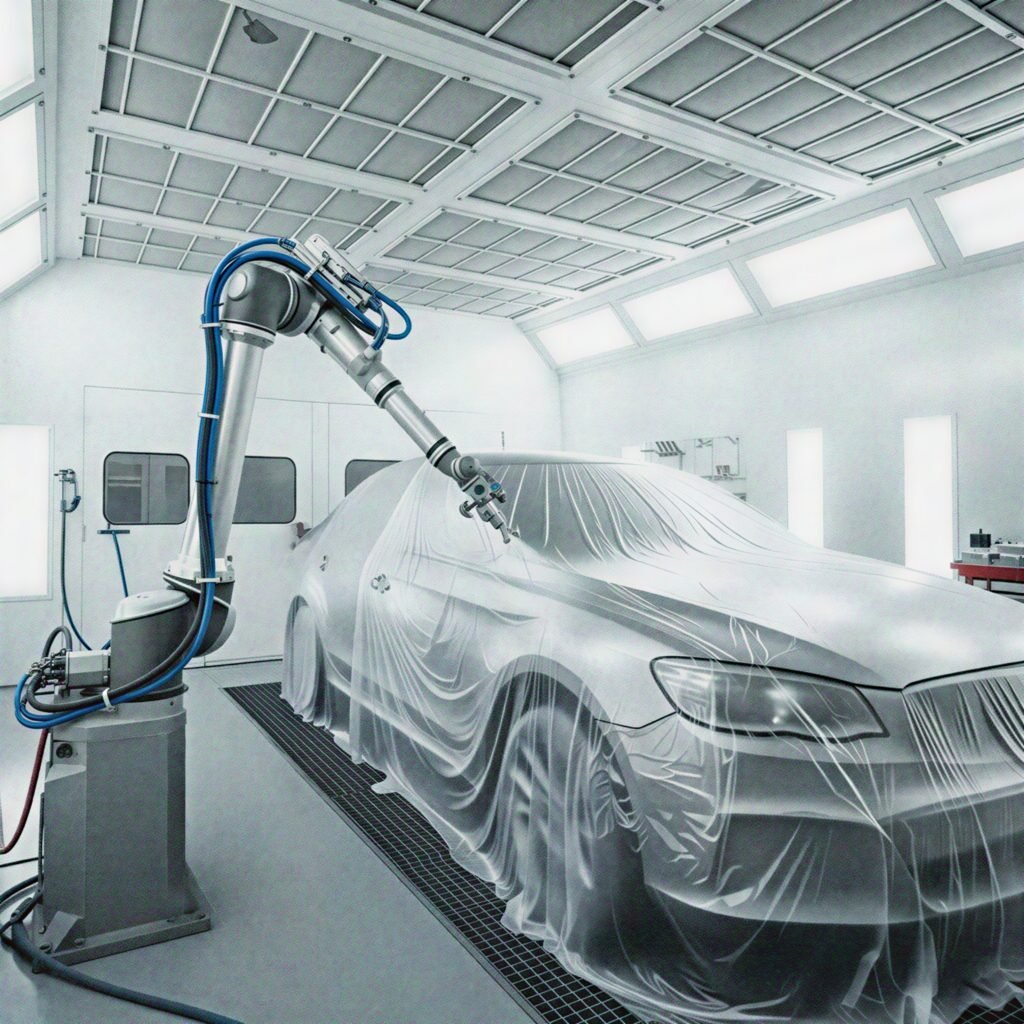
Robotic car painting means using a programmed spray robot to apply primer, basecoat, clearcoat, or selected coatings inside a booth or controlled spray area. In a small body shop, it usually supports painters rather than replacing the whole paint department.
A robot does not walk into the booth and “think” like a veteran painter. It follows scan data, taught paths, software settings, and spray recipes. The real value comes from repeatability.
Manual painters can have great hands, but people get tired. Their speed changes. Their overlap changes. Gun distance changes. A robot can repeat the same spray angle, distance, pass speed, and overlap again and again. That can reduce film-build variation and lower the chance of tiger striping, dry spray, heavy edges, and other finish problems when the rest of the process is controlled.
Modern vehicle paint work is also less forgiving than it used to be. Colors are more complex. Panels sit near cameras, radar brackets, trims, moldings, and plastic parts. Small shops are already dealing with more technical repairs, and employment data points to steady replacement demand for body repair workers through 2034, with about 16,000 yearly openings in the U.S. for automotive body and glass repairers.
That labor reality is one reason shop owners are looking at paint automation. The goal is not always to remove a painter. Often, it is to let a strong painter supervise more work, reduce booth stress, and spend less time on repetitive spraying.
Is robotic car painting profitable for small body shops?
Robotic car painting is profitable only when the robot saves enough labor, paint, booth time, and rework to beat its monthly cost. The math depends less on the robot itself and more on how many paint hours your shop sells every week.
A small shop should not judge robotic painting by factory claims alone. Factory paint lines run high volume. Collision repair is messier. One job may be a bumper. The next may be a quarter panel blend. Then comes a three-stage pearl job with repairs across multiple panels.
Profit comes from four areas:
Paint material control
Paint that lands on the vehicle creates value. Paint that becomes overspray becomes cost. A review of automotive spray coating technologies placed overall paint transfer efficiency in the automotive industry around 50% to 60%, which shows how much money can disappear between the cup and the panel.
Lower rework
A comeback burns booth time, materials, labor, and customer trust. If a robot helps reduce uneven application, dirt-related resprays through better booth discipline, or inconsistent clearcoat texture, the payback becomes easier to defend.
Labor stability
Painters are hard to find in many markets. Painting and coating workers are projected to have about 16,700 openings per year from 2024 to 2034, mostly from workers leaving the occupation or retiring. A robot cannot replace judgment, but it can help a shop protect output when one skilled painter is overloaded.
Booth throughput
A robot that sprays cleanly but sits idle most of the day is expensive shop décor. A robot that helps the shop push more repair orders through the paint department can pay for itself faster.
How much does a robotic car painting system cost?
A robotic car painting system can range from tens of thousands of dollars to well over $200,000, depending on robot type, booth fit, software, scanning, installation, safety gear, training, and integration. Car painting robots can cost between $50,000 to $200,000+ for many automotive paint applications.
That number should be treated as the starting point, not the full project cost.
Small body shops also need to account for setup work. That may include booth checks, electrical work, compressed air quality, ventilation review, floor space, software setup, staff training, service contracts, replacement parts, spray equipment, robot-safe booth practices, and downtime during installation.
A shop owner should ask vendors for the full installed price, not just the robot price. A low sticker price can become less attractive when the shop adds fixtures, sensors, software, annual support, maintenance, and lost production during setup.
A simple monthly view helps.
If a robot costs $120,000 installed and the shop finances it over five years, the monthly payment may be several thousand dollars before service and supplies. The robot then needs to save or produce more than that every month. That could come from one fewer comeback per week, lower paint waste, faster booth cycles, more cars delivered, or less overtime.
The question is not, “Can we afford the robot?”
The better question is, “Can our paint department feed the robot enough work to make the payment feel normal?”
What are the main benefits of robotic car painting for small shops?
Robotic car painting helps small shops most when it improves consistency, reduces waste, protects skilled painters, and creates more predictable output. These gains become stronger when the shop already has a clean process.
Consistency is the easiest benefit to understand. A robot does not rush because it is tired on Friday afternoon. It does not change wrist angle because its shoulder hurts. It can repeat the same pass pattern with tight control.
Paint savings can also be meaningful. Older conventional spray guns had transfer efficiency in the 20% to 40% range, while HVLP guns were estimated at at least 65% in an EPA technical profile on automotive refinishing equipment. A robotic system with the right applicator, spray path, and setup can reduce waste further, though results vary by coating, part shape, and operator setup.
Worker exposure is another benefit. Auto refinishing uses coatings and materials that require strong safety controls. The EPA’s Auto Body Rule targets air emissions from paint stripping and surface coating operations, and collision repair shops must meet training, booth, spray gun, and related requirements when covered by the rule. Keeping painters out of the booth during part of the spraying process can support a cleaner, safer workflow, but shops still need proper PPE, ventilation, training, and compliance habits.
Robots can also help with training pressure. A new painter may need years to build judgment on gun distance, overlap, blend behavior, and clear texture. A robotic system can take over some repeatable spraying while experienced staff focus on color, prep, inspection, and edge cases.
For a small shop, that can mean fewer days where every repair order depends on one exhausted painter.
What are the drawbacks of robotic car painting?
The biggest drawbacks are cost, complexity, space, training, maintenance, and the fact that collision repair work is rarely as predictable as factory painting. A robot is only as good as the process around it.
Small body shops often underestimate the workflow change. Robotic painting may require more planning before the vehicle enters the booth. Panels need to be positioned properly. Masking must be clean. The robot needs usable scan data or programmed paths. The spray area needs to stay organized.
A manual painter can adjust instantly when a bumper sits slightly off-angle on a stand. A robot may need the part placed correctly or the program corrected.
There is also maintenance. Paint robots work in a harsh setting. Overspray, solvents, booth heat, moving parts, hoses, seals, atomizers, sensors, and software all need care. A shop that already struggles to maintain its booth filters, air lines, and spray guns may struggle with a robot too.
The learning curve can frustrate teams. Skilled painters may feel threatened. Estimators may not understand what jobs fit the robot. Managers may push the system before the process is ready.
Robotic car painting can expose weak shop habits. That is not a bad thing, but it can feel rough at first.
Which small body shops are the best fit for robotic painting?
Robotic painting is a better fit for small body shops with steady volume, repeatable work, strong prep quality, and at least one skilled painter who can lead the process. It works best when the shop already knows its numbers.
A good candidate usually has:
- A paint department that creates a bottleneck several days a week.
- Enough weekly booth hours to keep automation busy.
- Frequent bumper, panel, fleet, or repeat repair work.
- High material spend that makes waste reduction valuable.
- Rework costs that are tracked, not guessed.
- A painter who can manage color, blends, spray settings, and finish quality.
- Management willing to train staff and adjust workflow.
Fleet repair shops can be strong candidates because they often see repeat vehicle types and colors. MSO-style collision shops may benefit too, especially if they have enough volume but not enough painter capacity.
A boutique restoration shop is a weaker fit unless it has repeat parts or production-style work. Restoration painting often involves custom judgment, long prep cycles, unusual substrates, and customer expectations that may not suit a robot-first workflow.
A small rural body shop with inconsistent paint volume may also struggle. If the booth is idle half the week, robotic painting may not make sense yet.
When is robotic car painting not worth it?
Robotic car painting is not worth it when the shop has low paint volume, poor prep discipline, weak cash flow, limited booth space, or no one willing to own the system. A robot cannot fix a broken operation.
If a shop only paints a handful of panels per week, the robot may sit unused. If jobs often stall because parts are late, estimates are incomplete, or supplements are slow, the robot will not fix the real bottleneck.
It is also not a good choice when the owner expects instant labor replacement. Robotic painting still needs people. Someone must prep, mask, scan, set up, mix, inspect, maintain, and correct problems. A robot can reduce dependence on manual spraying time, but it does not remove the need for paint knowledge.
Cash flow matters too. A shop should not buy a robot if the payment forces panic every slow month. Automation works best when it gives a stable shop more capacity. It is risky when used as a rescue plan for a shop already under pressure.
Can a paint robot replace an experienced automotive painter?
A paint robot cannot fully replace an experienced automotive painter in a small body shop. It can replace some repetitive spraying tasks, but it cannot replace color judgment, repair planning, blend strategy, defect diagnosis, or final quality decisions.
A great painter sees things software may miss. Is the metallic laying down correctly? Will this bumper need a different approach than the fender? Is the edge too wet? Does the blend need more room? Is the substrate ready?
The robot can make controlled passes. The painter decides whether the result is right.
This is where many shop owners get the wrong idea. The best use of robotic painting is often painter multiplication, not painter removal. One skilled painter may be able to supervise more output because the robot handles repeatable spraying. That can make the painter more valuable, not less.
For younger staff, the robot can also become a training bridge. They can learn prep, masking, material handling, scanning, booth procedures, and inspection while the senior painter teaches judgment.
How does robotic painting affect paint waste and overspray?
Robotic painting can reduce paint waste and overspray when the robot uses controlled spray paths, steady gun distance, correct overlap, and suitable applicator settings. The savings depend on the coating, panel shape, booth setup, and how well the system is programmed.
Overspray is not just a material cost. It also affects booth filters, cleanup, air quality, and finish control. Less wasted paint can mean less booth mess and fewer airborne particles.
Spray technology has a large role here. Conventional spray equipment in automotive refinishing historically wasted a large share of coating, while HVLP equipment improved transfer efficiency and reduced overspray. Robots can build on that idea because they reduce the human variation in distance, angle, and speed.
Still, a robot is not automatically efficient. Bad programming can waste paint. Poor part positioning can create dry spray or heavy buildup. Wrong settings can cause orange peel, mottling, or coverage problems.
The shop still needs test panels, measured material usage, and process records. Guessing will not prove ROI.
What should a small shop calculate before buying a paint robot?
A small shop should calculate current paint volume, material waste, rework rate, booth hours, painter labor cost, overtime, and expected extra throughput before buying a robot. The decision should be based on shop numbers, not excitement.
Start with monthly paint-related costs. Add paint materials, clear, primers, reducers, hardeners, cups, filters, booth supplies, painter wages, overtime, and rework. Then estimate what a realistic robot system could reduce.
For example, if a shop spends $18,000 a month on paint materials and booth-related consumables, even a modest waste reduction could matter. If the shop spends $4,000 a month, savings may not carry the payment.
Then look at rework. One respray may cost far more than the materials in the cup. It can delay delivery, upset the customer, and eat another booth slot. If robotic painting prevents two or three rework jobs per month, that can be a real part of the return.
Throughput may be the biggest number. If the robot helps the shop deliver two extra repair orders per week without adding another painter, the value can beat material savings.
What questions should you ask a robotic painting vendor?
A small body shop should ask practical questions about installed cost, booth fit, job types, training, support, maintenance, warranty, paint system compatibility, and real shop results. The answers should be specific.
Ask for examples from body shops close to your size, not only factory lines. A robot that works well in a plant may not match collision repair rhythm.
Good questions include:
- What is the full installed price with training and support?
- Will it fit inside my current booth?
- Which coatings and paint brands have been tested?
- Can it handle bumpers, doors, hoods, fenders, quarter panels, and blends?
- How long does setup take per job?
- What work still needs a manual painter?
- What maintenance is required every day, week, and month?
- What happens if the robot is down?
- How fast can a technician or remote support team respond?
- What data can the system track, such as material use and cycle time?
- Can I speak with a shop owner already using it?
The strongest vendor answer is not a sales claim. It is a walk-through of your real jobs and your real booth.
Robotic car painting versus hiring another painter
Hiring another painter is often better when the shop can find skilled labor, has enough booth space, and needs human judgment across varied jobs. Robotic painting is better when labor is hard to find, repeat work is common, and the shop wants more predictable spraying.
A painter brings flexibility. They can handle unusual blends, custom jobs, spot repairs, and quick changes. They can also help with prep, masking, teardown, and problem-solving.
A robot brings repeatability. It does not call in sick, leave for a competitor, or change technique day to day. It can make the shop less fragile when one person carries too much production pressure.
The best answer may be both. A robot plus a strong painter can produce better results than either one alone. The painter brings judgment. The robot brings repeatable motion.
For many small shops, the first step is not buying a robot. It is tightening the paint process enough that either a new painter or a robot can succeed.
Should small body shops buy now or wait?
Small body shops should buy now only if the paint department is already busy enough to support the investment. Shops with uneven volume, weak systems, or unclear numbers should wait, track their paint performance, and revisit the decision when the business case is stronger.
The technology is moving quickly, and body-shop-focused painting robots are becoming more visible. But early adoption carries risk. Support networks, parts availability, software maturity, and technician training can vary by vendor.
Waiting can be smart if your shop still needs better estimating, cleaner prep habits, stronger booth maintenance, or more reliable scheduling.
Buying can be smart if your paint department is already the bottleneck, your painter is overloaded, your material waste is high, and your monthly numbers show a clear path to payback.
A robot should feel like the next step for a disciplined shop, not a gamble made out of frustration.
Is robotic car painting worth it for small body shops in 2026?
Robotic car painting is worth it in 2026 for small body shops that have steady demand, strong paint processes, and enough repair volume to turn consistency into money. It is not worth it for shops that need flexibility more than repeatability or cannot keep the robot busy.
The fairest way to see it is this: paint automation robots are not a shortcut around skill. It is a tool that rewards skill.
A shop with clean prep, smart scheduling, good painters, and tracked numbers can use a robot to reduce waste, smooth production, and protect quality. A shop without those basics may only automate confusion.
For the right small body shop, the robot is not replacing craftsmanship. It is taking the most repetitive part of spraying and making it more predictable, so the people in the shop can focus on the work that still needs human eyes, hands, and judgment.