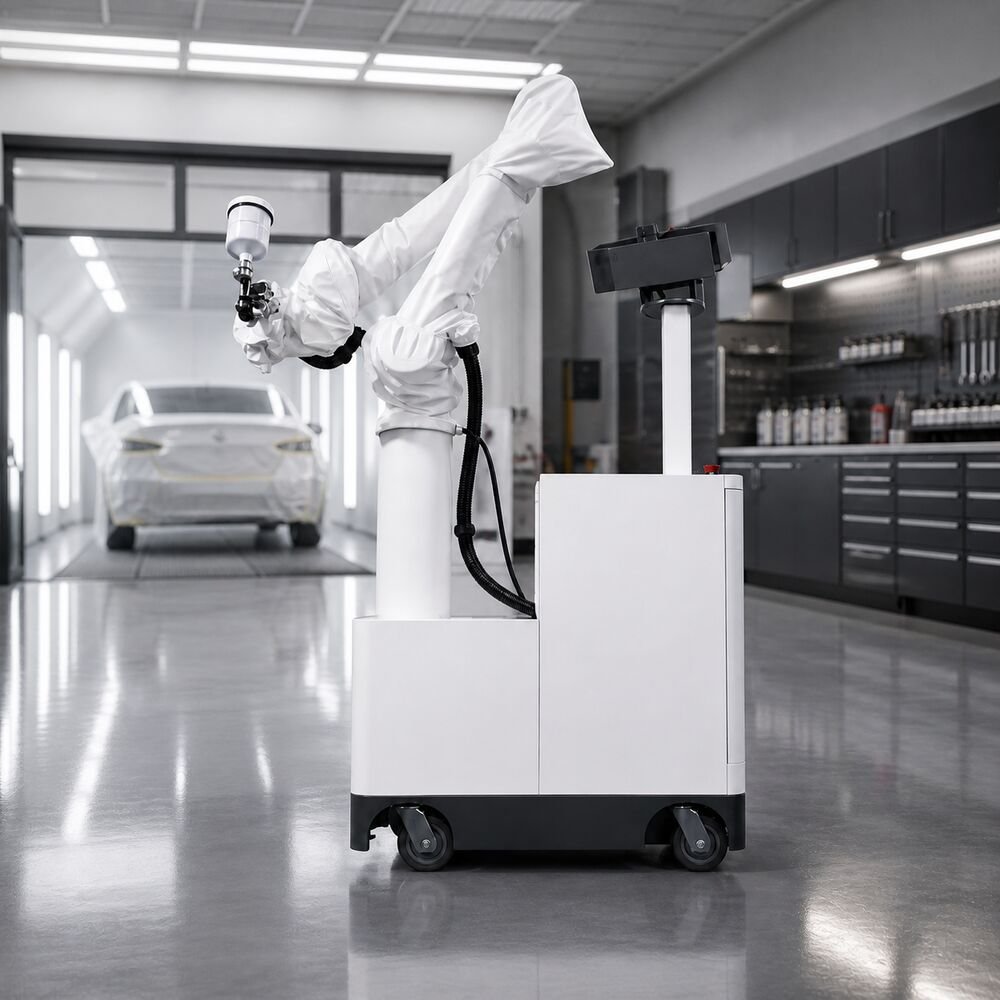
An automatic car painting machine applies primer, basecoat, clearcoat, or other coatings to vehicles and car parts with controlled spray movement. It can be a robotic paint arm, an automatic spray booth, a reciprocator system, an electrostatic setup, or a full paint line used in factories.
Automatic car painting machines help paint cars with better repeatability, less waste, and less direct exposure for workers. Costs vary widely. Small automatic spray setups may start around $10,000, while robotic paint booths and full OEM paint lines can reach hundreds of thousands or even millions of dollars.
That price gap can feel confusing at first. A small repair shop, a bumper supplier, and a car manufacturer all need different levels of automation. The right machine depends on the work being repeated every day.
What is an automatic car painting machine?
An automatic car painting machine is any controlled system that sprays paint on a vehicle, body panel, or automotive part with limited manual spray movement.
The machine may move a spray gun across a panel. It may use a robot arm to paint a full car body. It may also work inside a booth where cars or parts move on a conveyor.
The main purpose is to control the painting process better than hand spraying alone. Car paint is sensitive. Small changes in gun distance, spray speed, overlap, air pressure, paint flow, and booth airflow can change the finish.
A human painter can create a beautiful finish, but even skilled painters get tired. Their wrist angle changes. Their walking speed changes. Their spray distance may drift during long shifts.
A machine repeats the same path again and again. That repeatability is the reason automatic painting is common in car factories and is slowly gaining attention in body shops, fleet repair centers, and parts manufacturing.
Still, the machine does not fix poor preparation. Sanding, cleaning, masking, mixing, booth condition, and curing still control the final result. A robot can apply paint evenly, but it cannot make dirty panels clean or bad prep work disappear.
The Basic Working Principle Behind Automatic Car Painting
Automatic car painting works by controlling motion, coating flow, atomization, spray pattern, and drying time.
The process begins with the vehicle or part being prepared. In a factory, the body may pass through washing, pretreatment, electrocoat, primer, sealer, and sanding stages before color is applied. In a body shop, the panel may be sanded, cleaned, masked, and placed inside a booth.
Once the surface is ready, the automatic machine follows a programmed path. A robotic arm can move around curves, edges, pillars, roofs, bumpers, and door openings. A simpler reciprocator may move spray guns up and down while a part passes in front of it.
Paint travels from a supply system to the applicator. The applicator may be a spray gun, electrostatic gun, or rotary bell atomizer. It breaks the coating into tiny droplets and directs them toward the surface.
The control system manages timing. It decides when the spray starts, when it stops, how fast the tool moves, and how much paint is released. The goal is a steady film thickness without runs, dry spray, mottling, thin spots, or heavy edges.
After each coat, the paint may need flash-off time. This allows water or solvent to leave the film before the next layer. Then the coating is cured with heat, infrared equipment, or booth bake cycles.
The final stage is inspection. The painted part is checked for color match, gloss, texture, dust, runs, orange peel, coverage, and film build.
Main Types of Automatic Car Painting Machines
Automatic car painting machines come in several forms. Some are built for full vehicle bodies. Others are made for bumpers, wheels, doors, mirrors, hoods, or small plastic parts.
The main difference is movement. A robot can move in many directions. A reciprocator follows a simpler path. A conveyor paint line moves the part through a fixed process. Each setup has a different cost, space requirement, and best use.
Robotic Car Painting Machines
Robotic car painting machines use industrial robot arms fitted with paint applicators.
These robots are common in automotive factories because they can paint complex vehicle shapes with steady motion. Most automotive paint robots use six or seven axes, giving the arm the ability to reach around curves, corners, side panels, rooflines, and inner openings.
A robotic paint arm may carry a spray gun, electrostatic applicator, or rotary bell atomizer. The robot follows a programmed path, while the paint system controls flow rate, atomization, shaping air, and color change.
Robotic systems are often used for basecoat, clearcoat, primer, bumpers, plastic parts, and full car bodies. They can reduce overspray, lower rework, and improve consistency across high-volume production.
The main drawback is cost. A robot arm is only one part of the investment. The full setup may need a booth, controls, applicators, pumps, safety equipment, programming, training, and regular service.
Automatic Spray Booth Systems
An automatic spray booth system uses spray equipment inside a controlled booth.
The booth controls airflow, overspray, filtration, exhaust, and temperature. Spray guns may be fixed, mounted on moving arms, or attached to a simple machine that moves across the part.
This type of system is useful for parts that repeat in size and shape. Bumpers, wheels, doors, hoods, trim pieces, and industrial vehicle parts can often be painted this way.
Automatic spray booths are usually less flexible than robotic paint cells, but they can be easier to install and run. They are a good fit when the shop paints similar parts in batches.
The finish depends heavily on booth airflow, gun setup, filter care, spray distance, and part placement. A clean booth with stable airflow can give a smooth finish. A dirty booth will still create dust and defects, even with automatic guns.
Reciprocator Painting Machines
A reciprocator painting machine moves spray guns in a repeated straight-line motion.
The guns usually move up and down or side to side while parts pass through the spray area. This setup works well for flat or semi-flat parts where the shape does not require complex robot movement.
Reciprocators are common in parts painting because they are simpler than full robotic arms. They can apply paint at a steady speed and distance, which helps keep coating thickness more even.
They are often used for panels, doors, sheet metal parts, trim, and repeat production items. The lower mechanical complexity can also make maintenance easier.
The limitation is reach. A reciprocator may struggle with deep curves, hidden edges, recesses, and complex bumper shapes. Those areas may need extra guns, better fixtures, or manual touch-up.
Electrostatic Painting Systems
Electrostatic car painting uses electrical charge to attract paint droplets to the grounded vehicle or part.
This method helps more paint land on the surface instead of floating away as overspray. It is especially useful for metal parts and is widely used in automotive production.
The paint particles receive an electrical charge as they leave the applicator. The car body or part is grounded. The charged particles are attracted to the surface, including edges and curves.
Electrostatic systems can improve paint use, reduce booth waste, and give better wraparound coverage. They are often paired with robots or automatic spray booths.
The system needs correct grounding, clean fixtures, safe high-voltage controls, and proper booth conditions. Poor grounding can reduce finish quality and create safety concerns.
Rotary Bell Atomizer Systems
A rotary bell atomizer uses a spinning bell-shaped cup to break paint into very fine droplets.
This system is common in high-volume automotive paint shops. Paint flows onto the edge of the spinning bell. The bell spreads the coating into fine particles. Shaping air controls the spray pattern, while electrostatic charge can help pull paint toward the car body.
Rotary bell atomizers are valued for smooth finishes, strong paint control, and high transfer efficiency. They are often used for basecoat and clearcoat on car bodies.
The finish can be very uniform when the system is set up correctly. Film thickness, gloss, and texture become easier to control.
The tradeoff is cost and maintenance. Bell cups, cleaning systems, paint valves, air controls, and color change parts require trained technicians.
Conveyor-Based Paint Lines
A conveyor-based paint line moves vehicles or parts through several stages of the painting process.
This type of system is common in car factories and high-volume parts plants. It may include cleaning, pretreatment, electrocoat, primer, sealer, basecoat, clearcoat, flash-off zones, curing ovens, robots, inspection areas, and paint supply rooms.
The main benefit is production flow. Cars or parts move from one stage to the next with less manual handling. Cycle times stay more predictable.
A conveyor paint line is not a small purchase. It requires engineering, floor space, utilities, booth systems, air handling, filtration, fire protection, and skilled maintenance staff.
This setup makes sense when thousands of vehicles or parts need the same finish with tight process control.
Compact Automatic Paint Machines for Body Shops
Compact automatic paint machines are smaller systems made for repair shops, fleet work, and lower-volume production.
These machines may use a smaller robot, a guided spray unit, or a semi-automatic booth setup. They are not the same as full factory paint lines.
A compact system can help with bumpers, doors, hoods, fenders, fleet panels, and repeat repair work. Shops with steady volume may use them to support painters, reduce waste, and improve consistency.
They are not a full replacement for a skilled painter. Collision repair has many variables. Every damaged vehicle is slightly different. Blending, color matching, masking, repair judgement, and final inspection still need human skill.
The best use is repeatable work where the spray pass can be controlled and the shop already has strong preparation habits.
Popular Car Paint Robots Available in the Market
Several robot brands are widely used in automotive painting. These machines are usually built for spray booth environments and can work with paint guns, electrostatic applicators, or rotary bell atomizers.
The names below are not the only options, but they are among the most common brands buyers see when comparing automotive paint robots.
ABB Paint Robots
ABB is one of the best-known robot brands in automotive painting. Its paint robot family includes machines for exterior bodies, automotive parts, plastic components, and general industrial coating.
Popular ABB paint robots and related systems include:
| ABB paint robot or system | Common use |
| IRB 5500 FlexPainter | Exterior car body painting and large work zones |
| IRB 5510 FlexPainter | Small automotive parts and general industrial painting |
| IRB 52 | Smaller paint and coating applications |
| PixelPaint | Precise paint application, including detailed designs and two-tone effects |
| RB 1000i-S atomizer | Paint application with reduced paint waste |
ABB robots are common where high finish quality, short cycle time, and full paint process control are needed. Their systems are often paired with integrated paint application equipment, which helps reduce waste during color changes.
FANUC Paint Robots
FANUC offers a broad paint robot range for automotive bodies, components, plastic parts, and industrial coating.
Popular FANUC paint robot models include:
| FANUC paint robot | Common use |
| P-40iA / P-40A | Smaller parts, tight booth spaces, flexible coating work |
| P-250iB | Medium automotive parts and coating tasks |
| P-350iA | Larger components and body-related work |
| P-700iB | Large automotive painting applications |
| P-1000iA | Large vehicle body and high-reach applications |
FANUC paint robots are known for wide model choice, long reach options, and use in hazardous booth environments. They are often selected for car bodies, bumpers, plastic add-on parts, and coating lines that need high uptime.
Kawasaki Painting Robots
Kawasaki Robotics offers explosion-proof painting robots for automotive and industrial finishing.
Popular Kawasaki paint robot models include:
| Kawasaki paint robot | Common use |
| KF121 | Smaller painting applications |
| KF192 | Medium parts and coating work |
| KJ125 | Automotive parts and general painting |
| KJ244 | Medium-to-large workpieces |
| KJ264 | Larger paint booth applications |
| KJ314 | Automotive inner and outer body finishing |
Kawasaki’s K-Series robots are often used where hollow wrists, hose routing, and booth safety matter. Some models are designed for large automotive bodies, while others fit smaller parts.
Yaskawa Motoman Paint Robots
Yaskawa Motoman’s MPX Series is built for painting, dispensing, and powder coating.
Popular Motoman paint robot models include:
| Yaskawa Motoman paint robot | Common use |
| MPX1150 | Compact painting of contoured parts |
| MPX1950 | Medium coating work |
| MPX2600 | Automotive parts, guns, and larger bells |
| MPXL2600 | Extended reach coating work |
| MPX3500 | Car body exterior and interior painting |
These robots are used for car bodies, bumpers, attached parts, powder coating, and contoured surfaces. The MPX2600 and MPX3500 are especially relevant for automotive work because they support larger applicators and longer reach.
Durr Painting Robots and Paint Systems
Durr is a major paint shop supplier for the automotive industry. It provides painting robots, atomizers, booths, and full paint process systems.
Common Dürr paint technologies include:
| Durr system | Common use |
| EcoRP painting robots | Automotive body and parts painting |
| EcoBell atomizers | High-quality paint atomization |
| EcoPaint systems | Full paint shop application setups |
| EcoProBooth systems | Paint booth process equipment |
Durr is often found in large OEM paint shops because it supplies full systems, not only robot arms. Its EcoRP robots and EcoBell atomizers are used in production lines where paint quality, energy use, and cycle time all matter.
Staubli Painting Robots
Staubli is also used in industrial coating, especially where compact robots, clean movement, and fast cycles are useful.
Staubli is not always the first name people mention for full car body paint lines, but it can be relevant for parts painting, small automotive components, and industrial coating cells.
Common Staubli robot families linked with coating work include TX2 and RX-based systems, depending on the integrator and application.
Popular Automotive Paint Robot Brands and Models, Side by Side Comparison
The table below gives a quick side-by-side look at popular automotive paint robot brands, their well-known models or systems, and the type of painting work they are usually used for.
| Brand | Popular paint robot models or systems | Common use |
| ABB | IRB 5500, IRB 5400, IRB 52, PixelPaint | Car bodies, bumpers, two-tone paint, factory paint lines |
| FANUC | P-40iA, P-250iB, P-350iA, P-700iB, P-1000iA | Automotive bodies, plastic parts, bumpers, coating lines |
| Kawasaki | KF121, KF192, KJ125, KJ244, KJ264, KJ314 | Car bodies, medium and large parts, booth painting |
| Yaskawa Motoman | MPX1150, MPX2600, MPX3500, EPX Series | Car bodies, bumpers, powder coating, dispensing |
| Dürr | EcoRP, EcoBell, EcoPaint systems | Full OEM paint shops, robotic coating, atomizer systems |
| Staubli | TX2 paint robots, RX paint robots | Parts painting, industrial coating cells |
Automatic Car Painting Machine Cost Breakdown
Automatic car painting machine cost depends on size, robot type, booth setup, applicator, software, safety rating, installation, and production volume.
A small automatic system is very different from a full robotic paint booth. The machine price may look manageable at first, but the full project can rise once booth changes, air supply, fire safety, training, and integration are added.
Here is a practical cost range:
| Type of automatic painting setup | Estimated cost range | Best fit |
| Small automatic spray unit | $10,000–$40,000 | Small parts, panels, simple repeat jobs |
| Reciprocator spray system | $25,000–$150,000 | Doors, hoods, flat parts, batch work |
| Compact body shop paint robot | $50,000–$250,000+ | Collision shops, fleet work, repeat panels |
| Industrial robotic paint cell | $150,000–$750,000+ | Parts suppliers and larger production cells |
| Robotic paint booth | $500,000–$2 million+ | High-volume vehicle or parts production |
| Full OEM paint line | Several million to over $100 million | Car factories and large manufacturing plants |
These ranges are general planning numbers. A real quote depends on the brand, local labor costs, safety rules, booth condition, paint chemistry, and installation scope.
A used robot arm may cost far less than a new cell, but used equipment can bring hidden costs. Controllers, spare parts, programming support, explosion-proof ratings, and applicator compatibility all need careful checking.
Main Factors That Change the Final Price
The largest price drivers are the number of robots, booth size, applicator type, color change system, safety equipment, and installation work.
A single robot painting bumpers costs far less than a multi-robot booth painting full vehicle bodies. Long reach arms, seven-axis movement, internal hose routing, and hazardous-area ratings add cost.
The applicator also matters. A basic automatic spray gun is cheaper than an electrostatic rotary bell system. The bell system may cost more upfront, but it can reduce paint waste in high-volume production.
Paint color changes can add another layer of cost. A shop spraying one color all day has a simpler setup. A factory running many colors needs valves, flushing systems, paint circulation, software recipes, and waste control.
The booth may be the biggest surprise. Automation needs proper airflow, access, lighting, filtration, explosion protection, and robot-safe layout. Some shops can modify an existing booth. Others need a new booth.
Training and service also add to the total. Operators need to know programming, cleaning, maintenance, troubleshooting, and paint process basics. A machine without trained people quickly becomes an expensive problem.
Main Components Inside an Automatic Car Painting System
An automatic car painting system is made of several connected parts. The robot or spray unit is only the visible piece.
The applicator releases the paint. It may be a spray gun, electrostatic gun, or rotary bell atomizer. This part affects droplet size, spray shape, film thickness, and paint waste.
The motion system moves the applicator. It may be a six-axis robot, seven-axis robot, rail system, reciprocator, gantry, or fixed gun setup.
The paint supply system stores and delivers coating material. It may include pumps, pressure pots, hoses, filters, regulators, valves, mixing units, and flushing circuits.
The control system manages robot movement, spray timing, flow rate, recipes, safety signals, and sometimes sensor feedback. Newer systems may store part programs for different vehicle models or panel types.
The booth controls the environment. Airflow removes overspray and vapors while filters capture paint particles. A poor booth can ruin the finish even when the robot moves perfectly.
The curing system hardens the coating. It may use heated air, infrared curing, or oven stages. Correct cure time and temperature help the paint reach gloss, hardness, and durability targets.
Step-by-Step Automatic Car Painting Process
The automatic car painting process usually follows preparation, masking, spraying, flash-off, curing, and inspection.
Surface preparation comes first. Dirt, wax, oil, silicone, sanding dust, and moisture can cause defects. No automatic machine can save a contaminated surface.
Masking protects areas that should not receive paint. In collision repair, masking can be more time-consuming than spraying because every job is different.
Primer may be applied to repair areas, bare metal, plastic parts, or full panels. After primer dries, the surface may be sanded again to create a smooth base.
Basecoat adds color. Metallic and pearl colors need extra control because spray angle and overlap affect shade and flake appearance. Automatic machines can help keep these variables more stable.
Clearcoat adds gloss and protection. This stage is highly visible. Runs, dry spots, orange peel, and dirt are easy to see. A controlled spray path can help create a more even clear layer.
Flash-off happens between coats. The paint needs time for solvent or water to leave the film before the next coat or bake cycle.
Curing completes the coating process. After curing, the vehicle or part is inspected for color, gloss, film build, texture, coverage, and surface defects.
Benefits of Automatic Car Painting Machines
Automatic car painting machines offer repeatability, lower paint waste, better worker protection, and more stable production flow.
Repeatability is the biggest benefit. The machine can keep the same speed, distance, angle, and overlap across every pass. That helps reduce variation from one car or part to the next.
Paint savings can also be strong. More coating reaches the surface, and less ends up in filters or on booth walls. Automotive coatings, clearcoats, hardeners, reducers, and cleaning solvents are expensive.
Production speed improves when jobs repeat. A robot can paint the same part all day without fatigue. Workers can focus on prep, masking, loading, unloading, inspection, and repair decisions.
Worker exposure can drop because fewer people need to stand inside the spray zone during application. PPE, ventilation, and booth safety are still required, but automation can move the most hazardous spray work away from the painter.
Quality tracking also improves. Recipes, robot paths, flow rates, and cycle times can be stored. This helps factories and larger shops find the cause of paint defects faster.
Limitations and Practical Challenges
Automatic car painting machines have real limits. They cost money, require training, need maintenance, and work best when the jobs are repeatable.
A robot does not understand paint like an experienced painter. It follows instructions. If the surface is dirty, the mix is wrong, or the booth airflow is poor, defects will still appear.
Programming can take time. A full vehicle body needs careful path planning for sides, roof, pillars, inner areas, bumper shapes, and edges. Small repair jobs may not justify that setup time.
Maintenance is another challenge. Spray guns clog. Bell cups need cleaning. Pumps wear. Filters load up. Hoses and seals age. Robots need service checks and program backups.
Small shops also need to think about booth time. A machine only pays off if the shop can feed it with enough work. If the booth sits empty, the robot does not save money.
Automatic Car Painting for Small Body Shops
A small body shop should look at automation differently than a car factory.
The goal is not to build a giant paint line. The goal is to reduce waste, support painters, and handle repeat jobs with more consistency.
A compact automatic paint machine may make sense for shops that paint many bumpers, fleet panels, dealership repairs, doors, hoods, and insurance jobs. The more repeatable the work, the stronger the case.
Custom paint, restoration, and complex blending still depend heavily on human judgment. A machine can help with spraying, but the painter still needs to manage color match, blend zones, repair quality, and finish correction.
A shop should study paint cost, labor cost, rework rate, monthly volume, booth hours, and painter availability before buying. The machine should solve a clear bottleneck.
Automatic Car Painting for Factories and Parts Suppliers
Factories and parts suppliers gain the most from automatic car painting because their work repeats at high volume.
A car factory may paint hundreds of bodies per day. A supplier may paint thousands of bumpers, mirrors, panels, or trim pieces per week. In these settings, small gains in paint transfer, cycle time, and rework reduction can save serious money.
Robotic painting also helps meet strict finish targets. Automotive customers expect color match, gloss, durability, and surface quality across every vehicle.
Factories also need data. Automatic systems can store recipes, alarms, cycle times, and process values. This makes root-cause work easier when defects appear.
Parts suppliers may not need full car body robots. They may use reciprocators, smaller robots, or automatic spray booths built around fixtures and batch production.
AI and Smart Controls in Automatic Car Painting
AI and smart software are becoming more useful in automatic car painting, especially for path planning, inspection, and process monitoring.
Path planning is one area with strong value. Vehicle bodies have many shapes and surfaces. Creating robot paths manually can take time. Smarter software can help reduce programming work and make new model changes easier.
Vision systems can help identify part position before spraying. If a bumper or panel is slightly shifted, the system can warn the operator or adjust the spray path.
Inspection is another strong use. Cameras and sensors can help detect dirt, missed coverage, runs, texture problems, or color variation. Human inspectors still make final calls, but machine vision can catch defects earlier.
Smart controls can also watch pressure, flow, temperature, humidity, and spray behavior. If something starts drifting, the system can alert the team before many parts are affected.
AI is not a cure for bad process discipline. Clean booths, trained operators, correct mixing, good grounding, and steady air supply still matter more than software alone.
Manual Painting and Automatic Painting in the Same Shop
Manual painting and automatic painting are not competing methods. In many spray coating and finishing operations, both approaches work together: manual painting offers flexibility for complex or low-volume work, while automatic painting improves consistency, speed, and repeatability.
Manual painting is flexible. A skilled painter can adjust to unusual damage, custom work, restoration jobs, color blends, and small one-off repairs.
Automatic painting is better when the same type of work repeats. It keeps spray speed, distance, and overlap more stable over long production runs.
In a body shop, automation may handle repeat panels while painters handle blending, prep judgement, and final finish work. In a factory, robots may apply most coatings while people manage loading, inspection, repair, and process control.
The best setup is usually the one that gives machines the repeatable tasks and keeps people focused on decisions that need experience.
Maintenance and Service Life
A well-maintained automatic car painting machine can run for many years, but paint equipment needs regular care.
Daily cleaning is the foundation. Paint left in guns, nozzles, valves, bell cups, or hoses can dry and cause defects. Booth floors, walls, and filters also need routine cleaning.
Spray patterns should be checked often. Uneven atomization, spitting, narrow fan shape, or weak flow can damage finish quality quickly.
Electrostatic systems need grounding checks. Poor grounding reduces paint attraction and can create unsafe conditions.
Robots need service based on operating hours. This may include lubrication, cable checks, calibration, seal checks, controller backups, and inspection of covers.
A machine can last 10 to 15 years or more when it is maintained well. The robot arm may last longer than the spray equipment around it. Applicators, hoses, pumps, filters, seals, and valves usually need replacement sooner.
Choosing the Right Automatic Car Painting Machine
The right automatic car painting machine depends on daily paint volume, part shape, coating type, booth space, labor pressure, and budget.
A body shop with low paint volume may not need a robot. A shop with steady bumper and panel work may benefit from a compact automatic system. A parts supplier may need a reciprocator or robotic cell. A car factory needs a full paint line with robots, conveyors, booths, ovens, and process control.
Before buying, study these areas:
- Daily and monthly paint volume
- Parts or vehicle types being painted
- Current paint waste and rework
- Booth size and airflow
- Coating materials used
- Available technicians
- Service support from the supplier
- Spare parts access
- Training needs
- Long-term maintenance cost
A cheaper system is not always cheaper in real life. Poor support, weak parts access, and hard-to-use software can cost more than a higher-quality machine with strong local service.
An Automated Paint Setup Starts With the Work You Repeat Most
An automatic car painting machine can be a smart investment when it matches the work being done every day. It can bring steadier finishes, lower waste, safer spray conditions, and better production flow.
The key is fit. A small repair shop needs flexibility. A parts supplier needs repeatability. A car factory needs speed, data, and long-term process control.
Start with the pain points already visible in the paint area: wasted material, uneven finish, booth delays, labor shortages, rework, dust problems, or slow output. Then choose the machine that solves those problems without adding more complexity than the team can manage.
When the machine fits the process, automatic car painting becomes less about replacing painters and more about building a cleaner, more controlled way to produce a better finish.